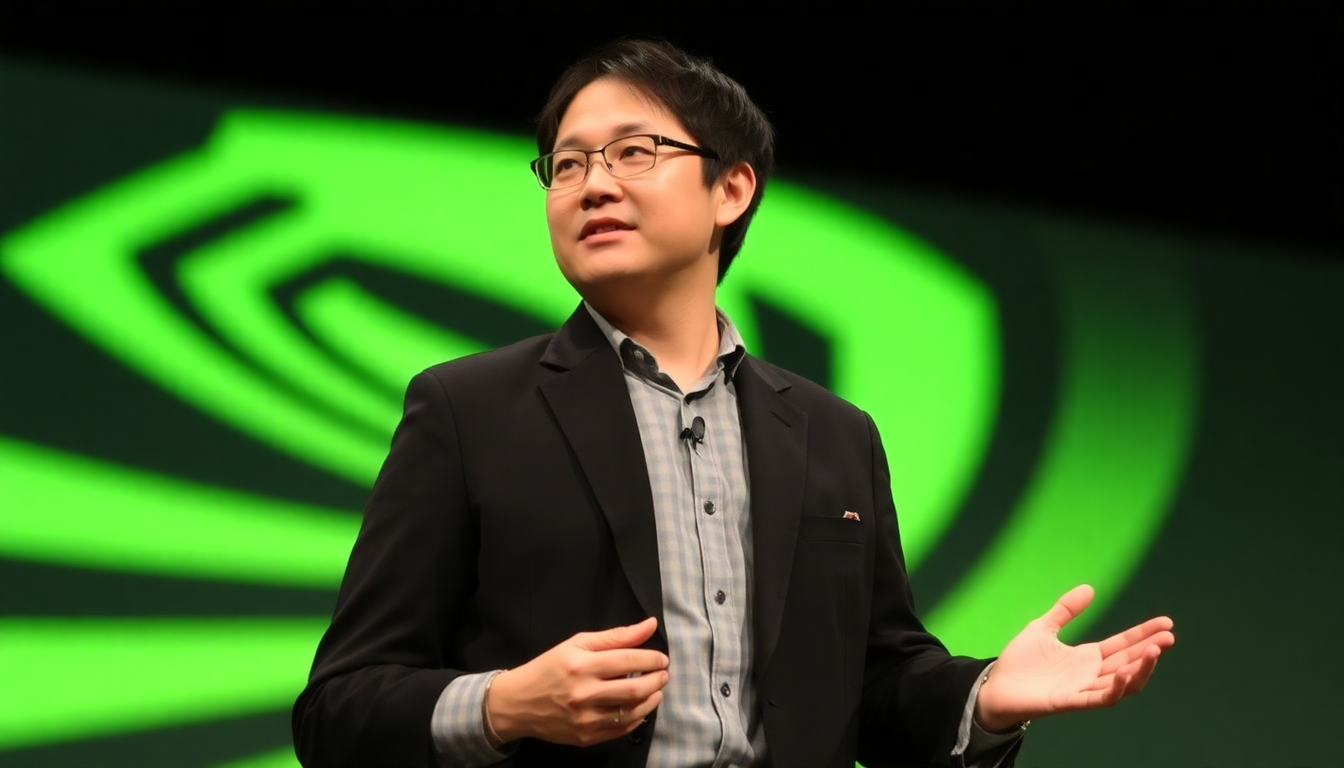
Nvidia is facing an unexpected leadership transition following Jensen Huang’s reported resignation, with speculation growing over who could become the company’s next permanent CEO. An Apple executive has reportedly emerged as a possible successor, while the announcement has triggered a significant reaction in NVDA shares.
On November 12, 2026, Nvidia disclosed that co-founder Jensen Huang had resigned from his roles as President, Chief Executive Officer, and board member, with the decision taking effect immediately.
The departure comes after increasing scrutiny surrounding Huang’s alleged personal relationships and reports involving potential national security concerns. Nvidia’s Chief Financial Officer, Colette Kress, has been appointed Interim CEO while retaining her existing CFO responsibilities. The board has also selected longtime director Harvey C. Jones as its inaugural Chairman and started looking for a permanent replacement. A senior Apple executive is reportedly among the early candidates being considered.
The news sparked heavy selling in Nvidia stock, with shares losing more than 10% in premarket trading. The decline added to recent weakness that has already removed hundreds of billions of dollars from the company’s market valuation. During midday trading, NVDA fluctuated around the mid-$150s to low-$160s.
Why Did Jensen Huang Resign as Nvidia CEO?
Huang’s reported departure follows allegations involving two extramarital relationships, which attracted additional attention because of their potential implications for Nvidia’s corporate governance and national security.
The first case involved Alice Huang, a businesswoman reportedly connected to Singapore-based AI firm Megaspeed, an important Nvidia customer. U.S. authorities have allegedly identified her as an asset associated with China’s Ministry of State Security.
Media reports claimed that Huang had been photographed alongside her on multiple occasions. The alleged connection raised concerns about whether foreign intelligence interests could have attempted to gain access to the Nvidia chief executive.
Huang subsequently addressed employees and apologized for his infidelity. However, he denied sharing confidential business information or engaging in any activity that threatened national security.
The controversy escalated after separate reports alleged that Huang had another relationship with Kimberly Powell, Nvidia’s vice president of healthcare, who reportedly worked directly under him.
The emergence of both allegations reportedly prompted Nvidia’s board to conduct an internal investigation. Following a late-night meeting, the directors accepted Huang’s resignation.
The combination of alleged personal misconduct involving a subordinate and the reported national security concerns surrounding the first relationship appears to have played a central role in the leadership change.
Who Is Colette Kress? Why Is Apple’s Johny Srouji Being Considered for Nvidia CEO?
Colette Kress has served as Nvidia’s Executive Vice President and Chief Financial Officer since September 2013. She is now leading the company on an interim basis as the board works toward selecting a permanent chief executive.
Before joining Nvidia, Kress built nearly 25 years of experience in financial leadership positions across the technology sector.
Her previous experience includes senior finance roles at Cisco, where she served as CFO of its Business Technology and Operations organization, and Microsoft, where she led financial operations for the Server and Tools division. She also worked at Texas Instruments earlier in her career.
Kress holds a bachelor’s degree in finance from the University of Arizona and an MBA from Southern Methodist University.
During her time at Nvidia, revenue expanded from approximately $4 billion to more than $200 billion, as demand for AI chips and advanced computing infrastructure transformed the company into a major force in the technology industry.
Her interim appointment is intended to maintain business continuity while Nvidia evaluates candidates for the permanent position.
Apple executive Johny Srouji has reportedly emerged as an early contender. His leadership experience in Apple’s chip development and hardware engineering operations could make him a significant candidate as Nvidia considers its future direction.
Hyperliquid’s NVDA Perpetual Market Reflects Nvidia’s Stock Sell-Off
Hyperliquid provides access to leveraged perpetual contracts based on Nvidia’s share price, allowing traders to speculate on NVDA movements around the clock without owning the underlying stock.
The contracts generally follow Nvidia’s traditional market performance and have experienced increased activity throughout the recent controversy.
Following the initial reports about Huang’s alleged relationships and the board’s investigation in early November, the Hyperliquid NVDA perpetual contract also experienced substantial downward pressure.
Its price declined from approximately $170–$175 to the mid-$150s, reaching around $158–$160 on November 12. This represents a loss of roughly 9%–11% during the latest sessions, with the overall decline extending further when measured against pre-scandal levels.
Open interest has remained high at hundreds of millions of dollars, indicating continued speculative participation. Funding rates have also moved in response to changing demand from long and short traders.
Trading activity accelerated following the resignation announcement, suggesting increased liquidations and rapid adjustments to existing positions.
From a technical standpoint, the contract has fallen below several short-term support levels, while momentum indicators have moved into deeply oversold territory.
Any meaningful recovery in Nvidia shares could quickly support a rebound in the corresponding Hyperliquid contract. However, leveraged exposure increases the risk of amplified price movements, meaning traders should remain cautious about potential volatility in either direction.