Here’s another rewrite with a more concise, smooth financial-crypto style:
ASTER posted sharp two-way volatility as bullish protocol news was offset by a hawkish Federal Reserve and broader weakness across risk assets.
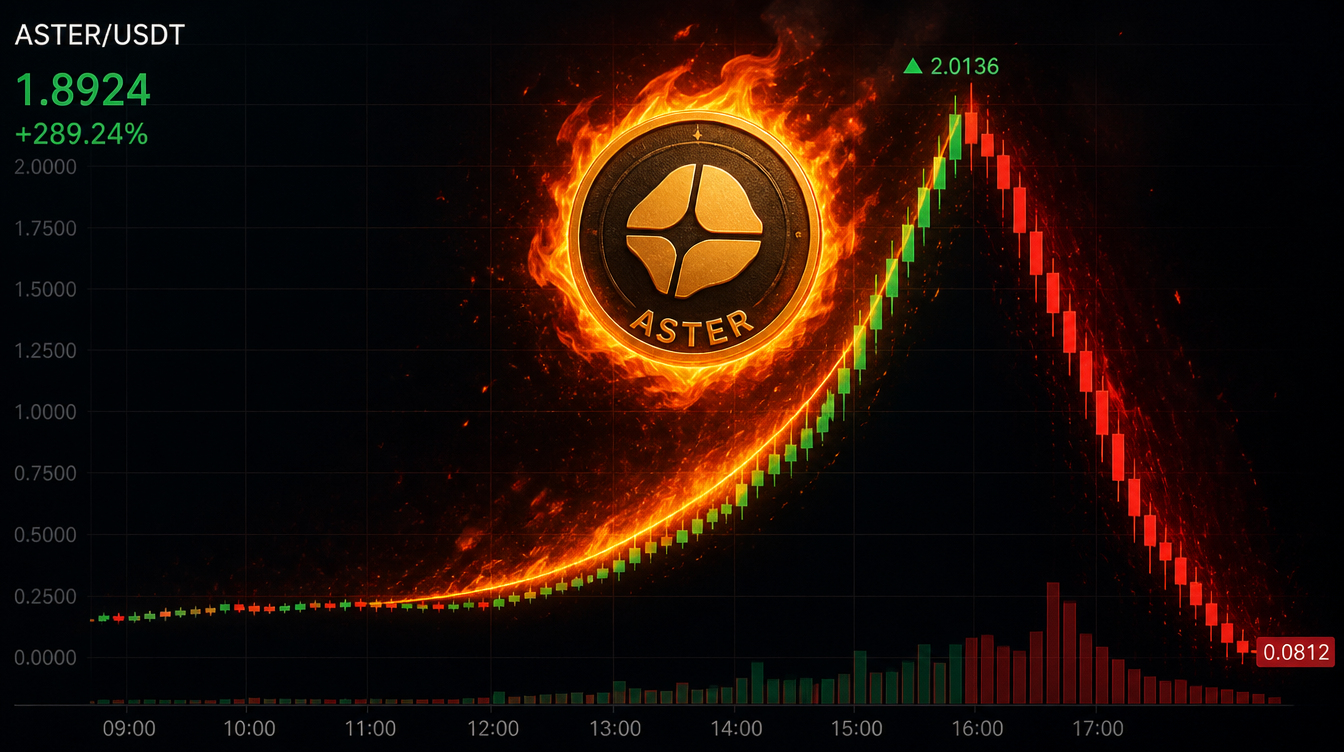
The decentralized perpetuals exchange token surged more than 10% on Wednesday to 80 cents—its highest level since January—before reversing, according to CoinDesk data. The initial move followed the announcement of a new tokenomics upgrade directing 99% of daily platform fees into an automated buyback program, effectively using protocol revenue to repurchase ASTER on the open market.
Tokens bought through the mechanism are distributed to veASTER holders, a non-transferable governance token obtained by locking ASTER. It provides fee revenue exposure, voting rights, and trading discounts on the Aster DEX.
Each buyback is paired with an equivalent token burn from protocol reserves, with bi-weekly reductions planned until total supply is reduced to 3 billion tokens, down from 7.82 billion.
The update replaces Aster’s prior linear vesting model, which released tokens into circulation regardless of demand and was phased out earlier this year in January 2026.
The protocol said the new structure ties token value more closely to platform activity, with all distributions executed on-chain and no discretionary reserve allocation.
Despite the strong initial reaction, gains faded as a more hawkish Fed strengthened the dollar and pressured crypto markets broadly.
At the time of writing, ASTER traded near 68 cents, down about 5% on the day after giving back most of its earlier advance.