Semiconductor stocks extended their rally for a second day as optimism surrounding artificial intelligence investments continued to lift markets, while the Japanese yen fell below 163 per dollar for the first time since the mid-1980s.
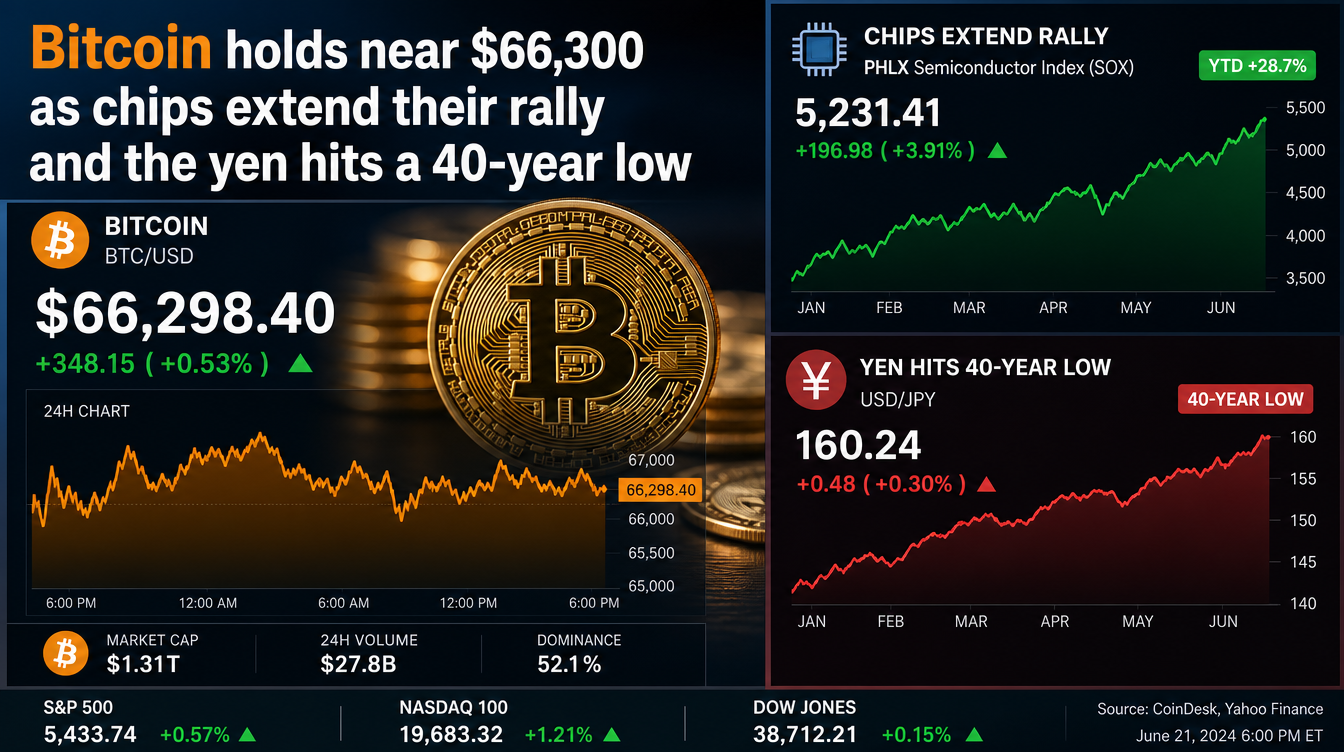
Bitcoin remained steady near $66,300 on Wednesday, holding close to a two-week high as the AI-linked chip rally that has supported crypto markets this month continued. At the same time, the yen weakened to its lowest level in approximately 40 years.
The largest cryptocurrency gained about 1% during the session and was up nearly 3% over the week, with daily trading volume around $31 billion. BTC traded between roughly $65,400 and $66,900 during the 24-hour period.
Ether changed hands near $1,935, posting a weekly increase of around 3%. XRP advanced 2% to $1.14, while TRON recorded a modest gain. Hyperliquid’s HYPE underperformed, dropping 4% to $60 and extending its weekly decline to about 10%. Bitcoin’s continued dominance and limited volatility among major tokens suggest the market’s recent strength is being driven primarily by wider economic trends rather than crypto-specific catalysts.
The semiconductor sector remains the main force behind the current risk rally. MSCI’s Asia-Pacific equity index rose 1%, adding to Tuesday’s strongest daily gain in a month. South Korea’s Kospi jumped 5% as the unwinding of leveraged positions that had pushed the benchmark almost 30% below its peak appeared to be easing.
Samsung and SK Hynix led the move higher after a U.S. semiconductor index gained more than 5% on Tuesday, helping the sector recover from a technical bear-market decline.
The market impact from China’s recent AI-related disruption, which pressured chip stocks and Bitcoin earlier in the week, has now largely faded.
Meanwhile, currency markets have become a major focus, with the yen sliding past 163 per dollar for the first time since 1986. The decline continued despite Japan’s previous currency-support efforts. Finance Minister Satsuki Katayama said authorities remain prepared to take “bold steps” if necessary, Bloomberg reported, but the combination of a stronger dollar, rising U.S. bond yields, and higher oil prices tied to Iran-related tensions has continued to weigh on the yen.
For Bitcoin supporters, the situation reinforces a long-running argument that monetary instability can increase demand for assets with limited supply.
A major currency losing substantial value against the dollar while policymakers struggle to reverse the trend despite large interventions reflects the type of currency debasement scenario often highlighted by Bitcoin advocates.
Still, there is little evidence that yen weakness is currently driving Bitcoin flows. In recent months, BTC has tracked movements in semiconductor stocks more closely than foreign exchange markets. However, continued currency pressure adds another macro factor supporting the broader investment case for scarce assets like Bitcoin.