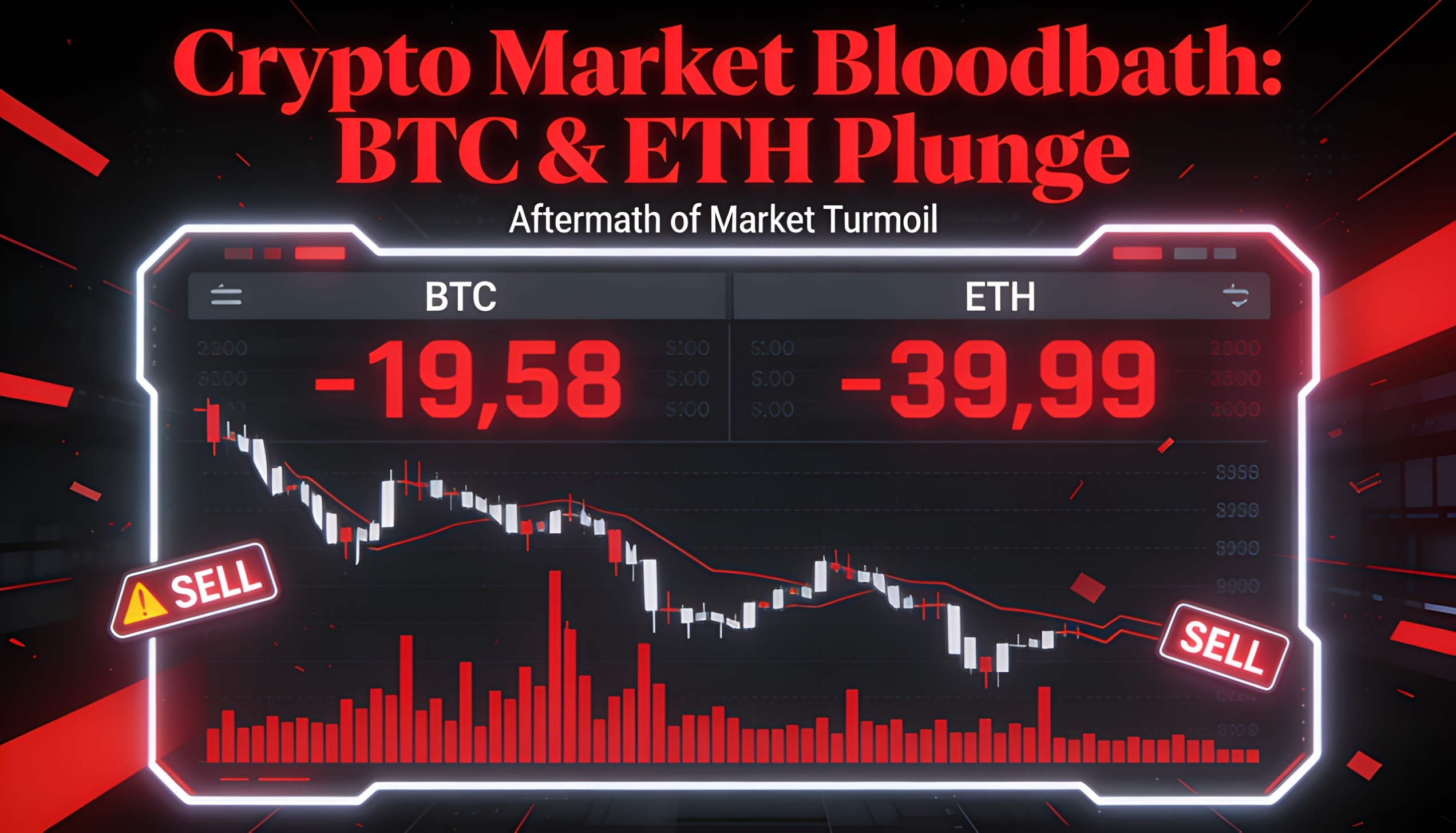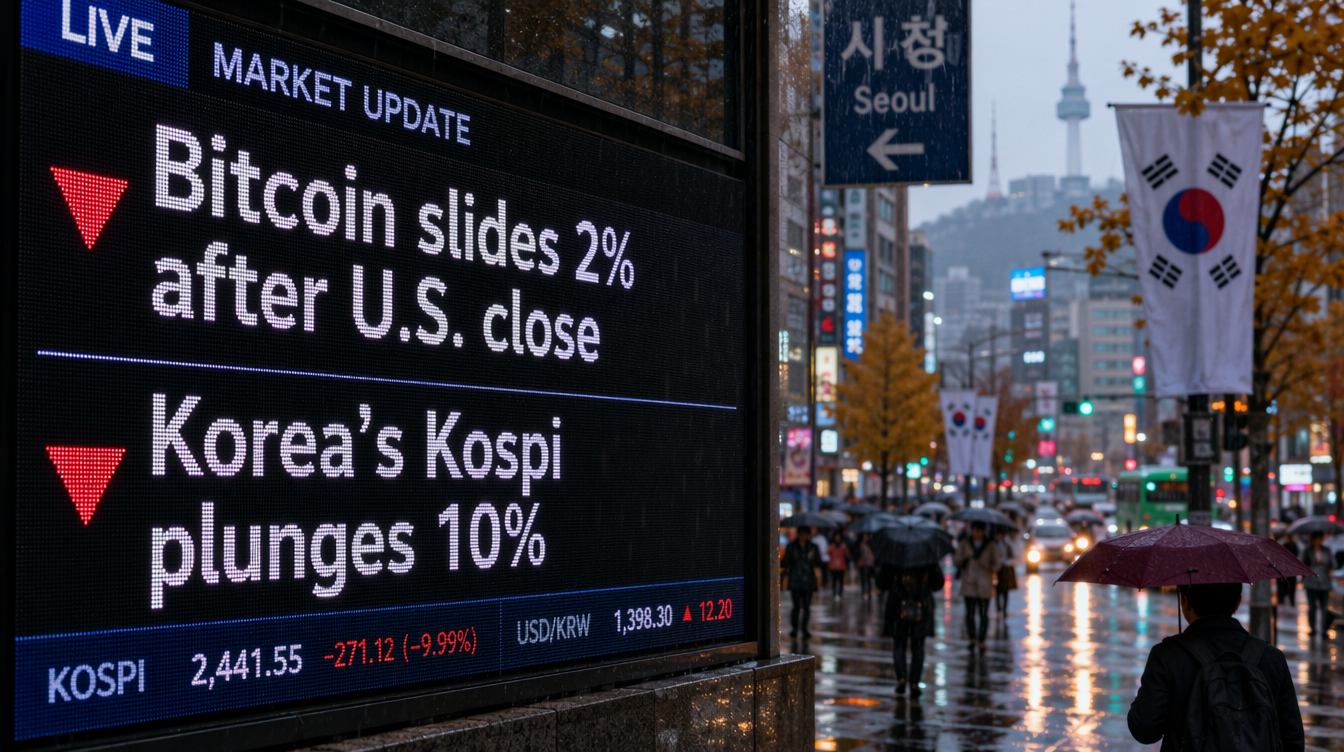
Bitcoin came under renewed pressure following the U.S. market close on Monday, as a sharp decline in South Korea’s Kospi index weighed on Asian equities and fueled a risk-off move across cryptocurrency markets.
BTC fell from levels near $65,000 to around $63,200, marking a drop of approximately 2.7%. The decline spread throughout the broader crypto market, pushing major assets including Ethereum (ETH), XRP, and Solana (SOL) lower. The move ended the market’s brief period of strength earlier in the session, when cryptocurrencies had held up despite weakness in Nvidia shares.
Investor sentiment was also impacted by uncertainty surrounding the Senate’s CLARITY Act. Lawmakers have postponed focus on the crypto market structure bill while prioritizing a Russia sanctions measure, making a vote before next week increasingly unlikely. The delay leaves only a short period before the Senate’s August 8 recess, despite hopes that the legislation could establish clearer rules for digital assets and encourage larger institutional involvement.
Asian markets experienced a sharp selloff, led by South Korea’s Kospi, which dropped 10% to its weakest level since mid-April. The index has now declined 25% from its mid-June peak, with major technology companies such as Samsung and SK Hynix among the biggest losers. Analysts pointed to weakening investor confidence in semiconductor stocks as a major driver behind the broader market decline.
Although Bitcoin has historically shown some connection with equity markets during periods of stress, the relationship is not always straightforward.
Bitfinex analysts explained that Bitcoin typically moves alongside stocks when market concerns are driven by macroeconomic issues, particularly interest rate expectations. However, BTC can diverge from equities when market weakness is caused by sector-specific factors. They noted that current concerns over technology earnings and corporate spending are more focused on individual companies, suggesting that Bitcoin’s link with stocks may be overstated.
Attention now turns to key economic events later this week that could influence markets across asset classes. The Federal Reserve is set to announce its latest interest rate decision on Wednesday, followed by important economic releases on Thursday.
Nexo analyst Dessislava Ianeva said the combination of the Fed meeting, core PCE inflation data, and GDP figures makes the Wednesday-to-Thursday period the most important stretch of the week for potential shifts in interest rate expectations and market volatility.