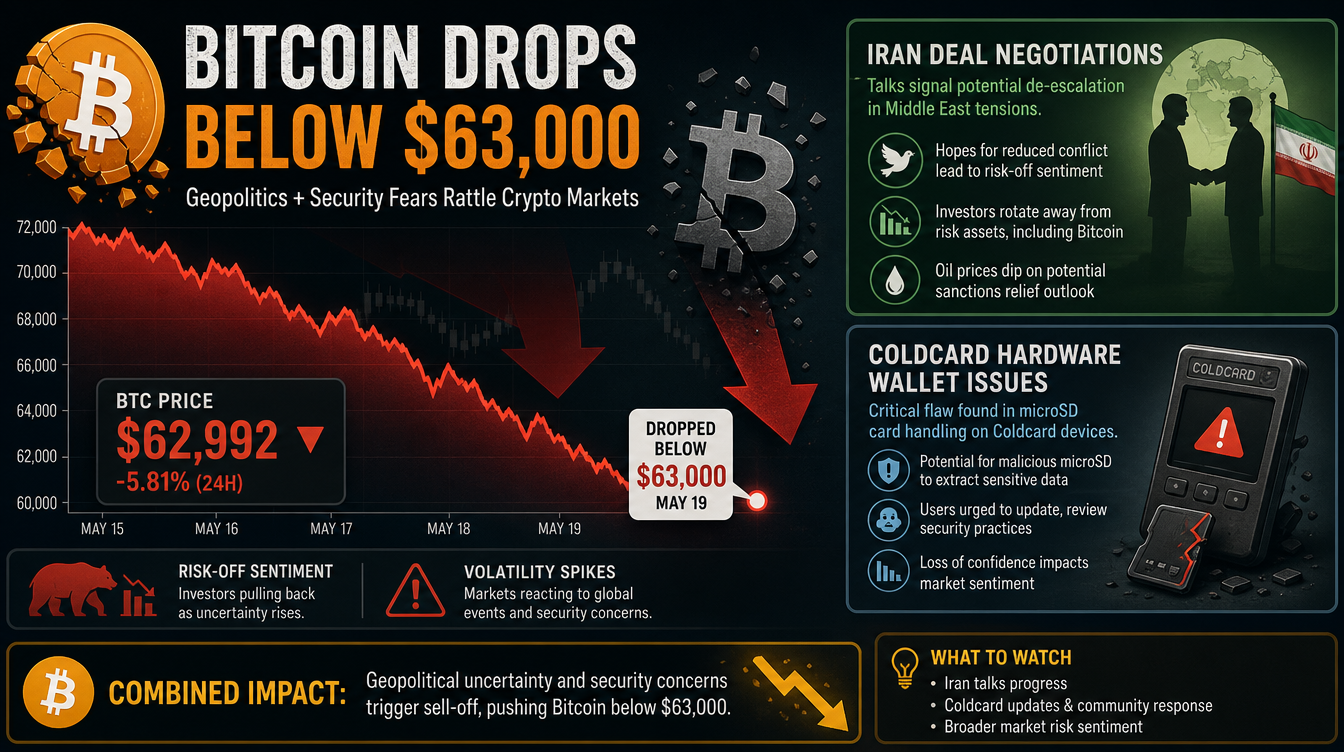
Bitcoin and ether failed to rally despite improving macro conditions, as falling oil prices and Treasury yields were overshadowed by renewed concerns surrounding the Coldcard wallet exploit, which has pushed reported losses close to $89 million.
Major cryptocurrencies traded lower on Monday even as optimism around fresh U.S.-Iran negotiations helped improve broader market sentiment. The continued discovery of Coldcard-related wallet sweeps kept pressure on digital assets, with investors remaining cautious about the ongoing security issue.
Bitcoin slipped from a Sunday peak of around $63,600 to nearly $62,800 on Monday, down 1% over 24 hours and 4% over the past seven days. Ether dropped more than 1% to $1,858, remaining below the $1,900 mark since last week and extending its weekly decline to 5%. XRP fell almost 1% to $1.07, while Solana declined roughly 0.5% to about $73. Dogecoin also edged lower by around 0.5%, trading slightly below $0.07.
BNB was the only major cryptocurrency to post a positive weekly performance, staying flat on the day and gaining 1.6% over the last seven days. Hyperliquid’s HYPE token declined 1% to $52.52, making it the weakest performer among the top 10 cryptocurrencies with a 12.8% weekly drop.
Meanwhile, traditional markets showed signs of improvement. Brent crude futures for October fell as much as 7.3% to $81.55 per barrel after President Donald Trump announced that he had paused plans for military action against Iran and would begin new discussions. Saudi Arabia and other regional partners were reportedly supporting efforts to reach an agreement that could reopen the Strait of Hormuz.
The decline in oil prices helped ease inflation concerns and boosted Treasury markets. The 10-year yield dropped four basis points to 4.69% after reaching its highest level since January 2025 last week. Nasdaq 100 futures and European equity futures both climbed 0.8%, while gold gained 0.3% to approximately $4,060 per ounce.
Such conditions are usually supportive for risk assets, including cryptocurrencies. However, bitcoin failed to respond positively, with market attention focused on the Coldcard hardware wallet vulnerability rather than macroeconomic developments.
The latest Coldcard-related sweeps increased total observed losses to 1,367 BTC, worth nearly $89 million, spread across 4,585 addresses. The average bitcoin loss per wallet has continued to decline with each wave, suggesting attackers may have already drained larger holdings and are now targeting smaller balances.
The first attack wave on July 30 removed 1,083 BTC from 1,196 addresses. The third wave, by comparison, affected 1,912 wallets but resulted in only 208 BTC being taken, indicating a shift toward lower-value targets.
Crypto investment products also showed a notable divergence, with ether funds recording small inflows on Friday while bitcoin funds experienced outflows. The split is unusual because bitcoin generally leads market direction and often influences moves across major digital assets.
Traders are now watching whether bitcoin can maintain support around $62,000 as U.S.-Iran talks progress. A successful agreement that pushes oil prices lower could provide another opportunity for crypto markets to recover. If bitcoin remains unable to gain traction despite improving external conditions, it would indicate that internal market concerns are driving the weakness.