BlackRock is closely monitoring Wednesday’s CPI report as an early indicator of how rising U.S.-Iran tensions may be feeding into already elevated inflation levels in the U.S. economy.
The firm is also watching the May U.S. inflation data for clearer evidence of how the ongoing U.S.-Iran conflict is adding pressure to already persistent price increases.
According to BlackRock Investment Institute in its weekly commentary, “We look to May U.S. inflation figures for a clearer read on how the Mideast conflict energy shock is impacting already sticky inflation. The full breadth of the shock has yet to show and will depend on how it evolves.”
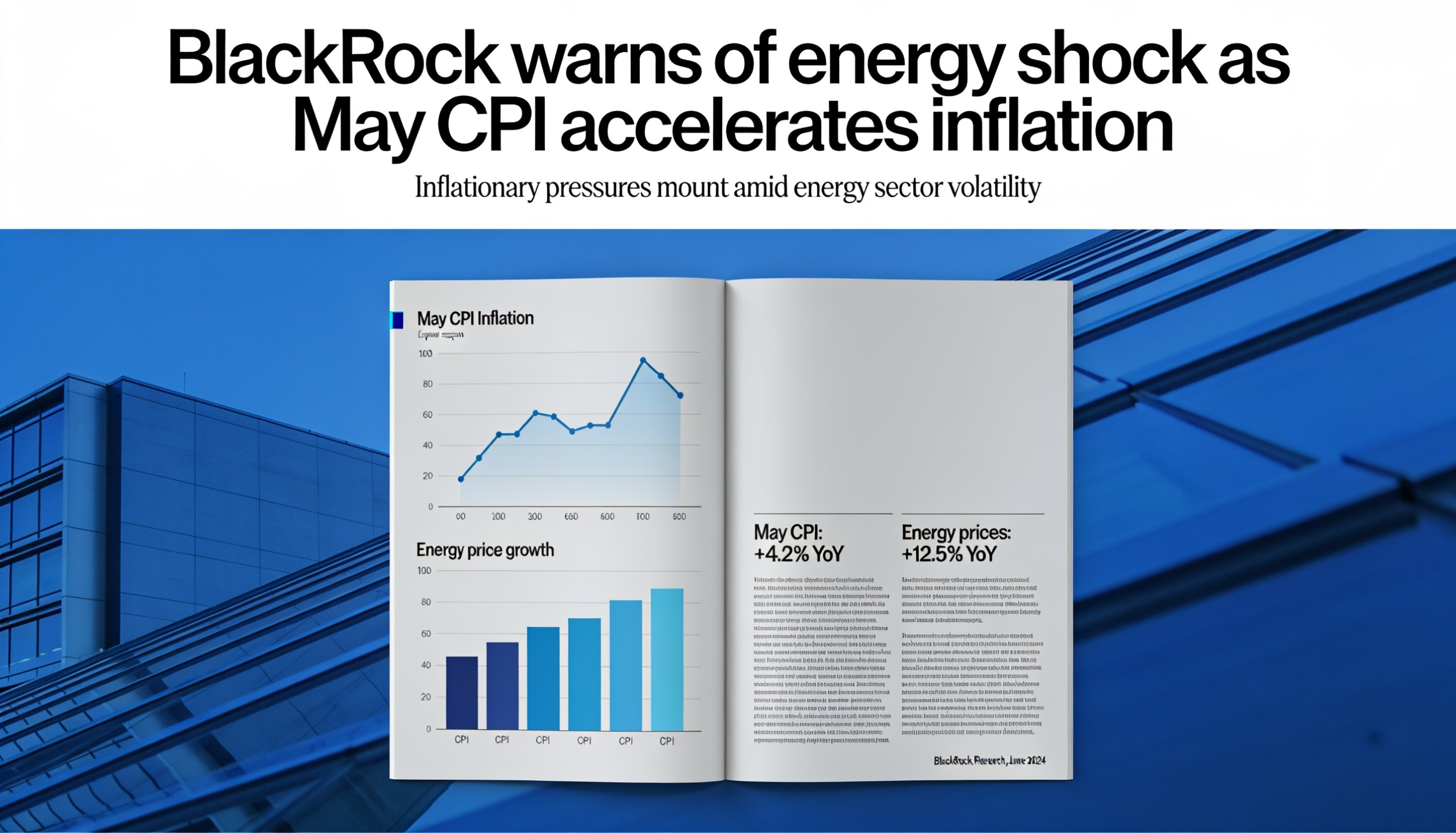
The U.S. Consumer Price Index (CPI) for May is set to be released on Wednesday at 08:30 am ET. Reuters surveys of economists expect inflation to rise 4.2% year-over-year, the fastest pace since April 2023 and higher than April’s 3.8%.
Such an increase would further underline that inflation remains well above the Federal Reserve’s 2% target, raising the possibility that the central bank may lean toward additional rate hikes instead of cuts that markets had anticipated earlier this year.
Higher interest rates generally reduce appetite for risk assets, including cryptocurrencies. As a result, a hotter-than-expected CPI reading could add further downward pressure on crypto markets. Bitcoin has already declined sharply, falling nearly 14% last week and slipping below $60,000.
BlackRock also pointed to a key risk scenario involving a prolonged disruption in the Strait of Hormuz lasting into July. Such an event could intensify the energy-driven inflation shock, particularly if U.S. oil inventories drop toward their lowest levels in four decades.
The firm noted, “We think a prolonged closure of the Strait of Hormuz into July could bring the impact of the shock to the fore more prominently, especially as U.S. oil inventories potentially hit four-decade lows.”