Investors are pulling back from both bitcoin and gold, suggesting a possible easing in geopolitical risk appetite as markets reassess the outlook for Middle East tensions.
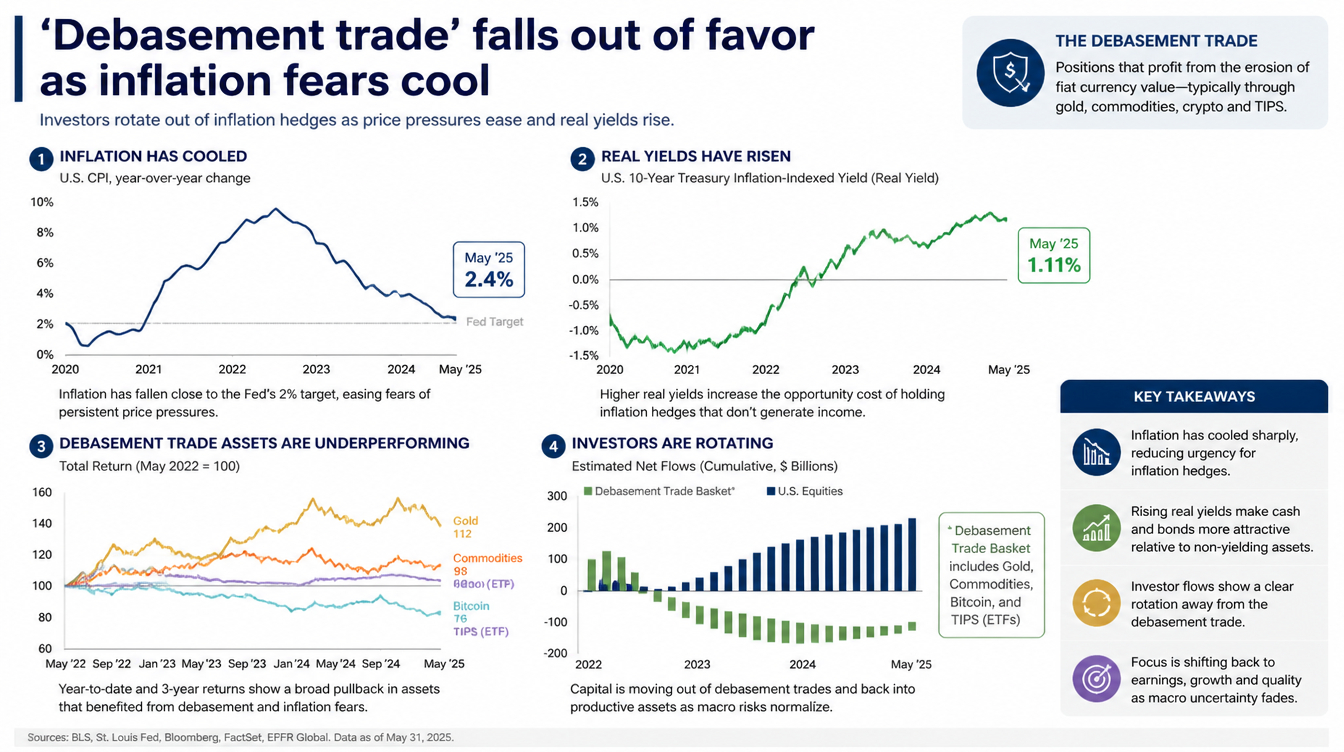
The so-called “debasement trade” that had supported strong demand for bitcoin and gold during recent bouts of instability is beginning to lose momentum, according to JPMorgan analysts led by Nikolaos Panigirtzoglou.
In a note on Thursday, the bank said investors have recently withdrawn capital from both bitcoin and gold ETFs, while futures positioning tied to the two assets has also softened. The synchronized decline points to a broader unwind of macro hedge positions that gained popularity earlier in the year amid inflation concerns and geopolitical uncertainty.
Data from Farside Investors shows bitcoin ETFs have recorded notable outflows over the past two weeks, mirroring weakness in gold ETF demand. At the same time, CME futures positioning across both markets has also eased, indicating reduced institutional appetite rather than rotation between the two assets.
Panigirtzoglou said the pattern does not suggest capital is moving from bitcoin into gold, but rather that both trades are losing traction simultaneously.
“Bitcoin had been the main manifestation of the debasement trade since the start of the Iran conflict,” the report noted.
The debasement trade typically refers to positioning in assets viewed as stores of value during periods of elevated inflation risk or currency depreciation concerns. Bitcoin and gold tend to benefit in such environments, particularly when investors expect higher fiscal spending, rising sovereign debt, or prolonged loose monetary policy.
Those narratives strengthened earlier this year as Middle East tensions pushed oil prices higher and raised fears of renewed inflationary pressure across global markets.
However, JPMorgan suggested the recent pullback may reflect shifting expectations that geopolitical risks could be easing. Markets may also be positioning ahead of potential diplomatic progress between the United States and Iran, reducing demand for traditional inflation and conflict hedges.
The bank’s analysis points to a broader recalibration in positioning, with investors stepping back from macro-driven hedges as the perceived urgency of geopolitical risk fades.