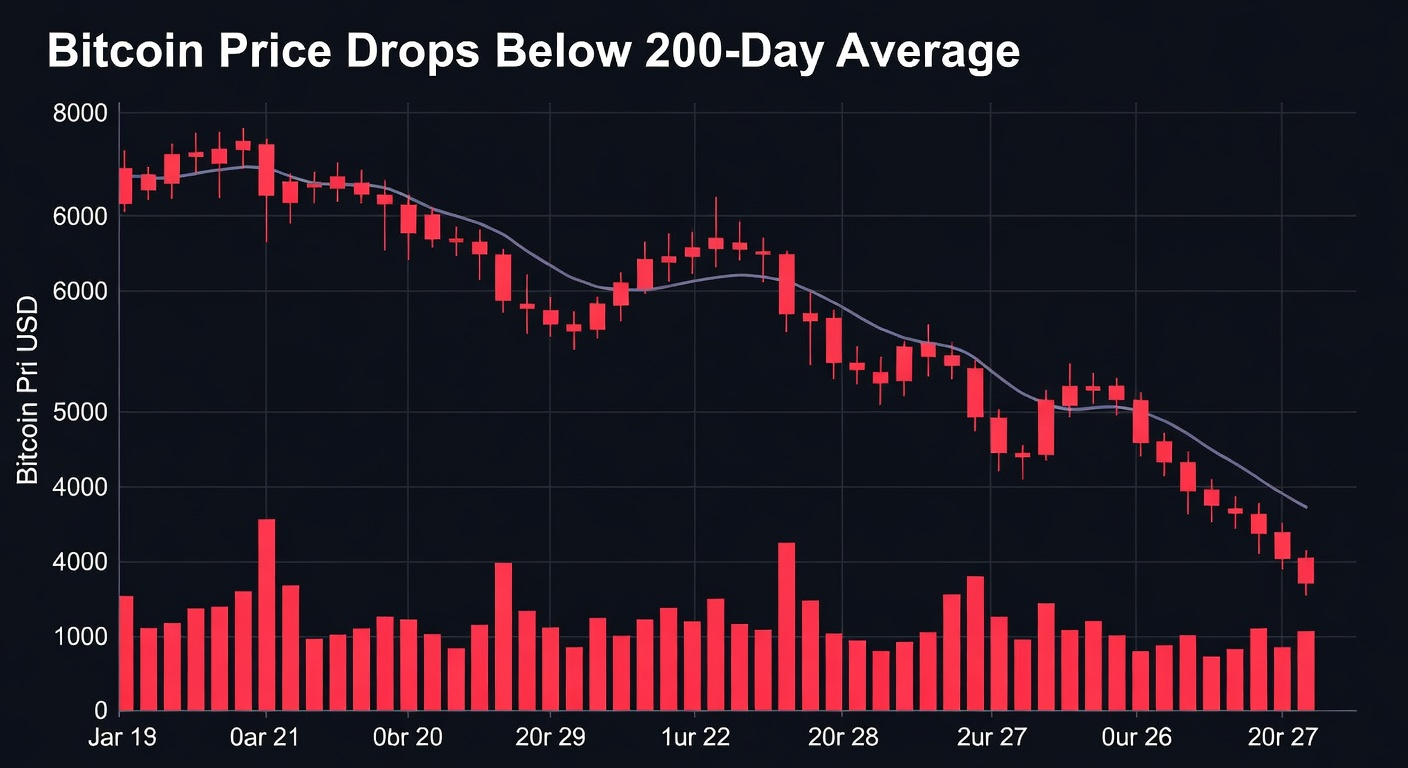
Bitcoin recently turned lower after failing to hold above the 200-day moving average, a widely watched indicator of long-term market direction. Analytics firm CryptoQuant explains the key forces behind the rejection.
Bitcoin’s recovery from its February lows—initially viewed by some traders as the early stages of a broader bull trend—ran into strong resistance at the 200-day simple moving average (SMA), which sits just above $82,000. After being rejected at that level, prices have since eased back toward $77,500. The move has drawn comparisons to 2022, when a similar 43% relief rally also failed at the same technical barrier before the market resumed its broader downtrend.
In its latest report, CryptoQuant argues that the rally lost momentum because the core drivers behind the April and early May advance began to fade. According to the firm, the upswing was initially powered by a combination of leveraged futures positioning, strong spot market demand, and consistent inflows into U.S.-listed Bitcoin ETFs—all of which have recently weakened.
CryptoQuant’s Bull Score Index has now dropped from 40 to 20, a level it categorizes as “extremely bearish.” Historically, this zone has aligned with prior consolidation phases, including the February–March period when Bitcoin traded between $60,000 and $66,000.
One of the clearest signs of weakening demand, the report notes, is the Coinbase Bitcoin premium, which has stayed negative through both the rally and the subsequent pullback. The metric tracks price differences between Coinbase and offshore exchanges, with a positive premium typically reflecting stronger U.S. buying pressure. Its persistence below zero suggests U.S. investors have not been aggressively stepping in during the rally.
Institutional flows are also confirming the shift. U.S. spot Bitcoin ETFs have recently turned into net sellers, with data from SoSoValue showing about $979.7 million in outflows for the week ending May 19, following roughly $1 billion in withdrawals the week before. This marks a sharp reversal from six consecutive weeks of inflows that had previously supported the upward move.
Weakness is also appearing in Asian markets. Korea’s so-called “kimchi premium,” which measures local demand for Bitcoin, has slipped below zero, indicating softer appetite on domestic exchanges. Meanwhile, Hong Kong’s trio of spot Bitcoin ETFs—managed by ChinaAMC, Bosera HashKey, and Harvest—have seen relatively muted trading activity, with daily volumes rarely exceeding a few million dollars throughout May.
Looking ahead, CryptoQuant highlights $70,000 as a key on-chain support level, based on traders’ realized price. This level has acted as a ceiling in prior cycles, including October and January, and may now serve as an important downside area to watch if the correction continues.