Here’s another rewritten version with a distinct style and flow:
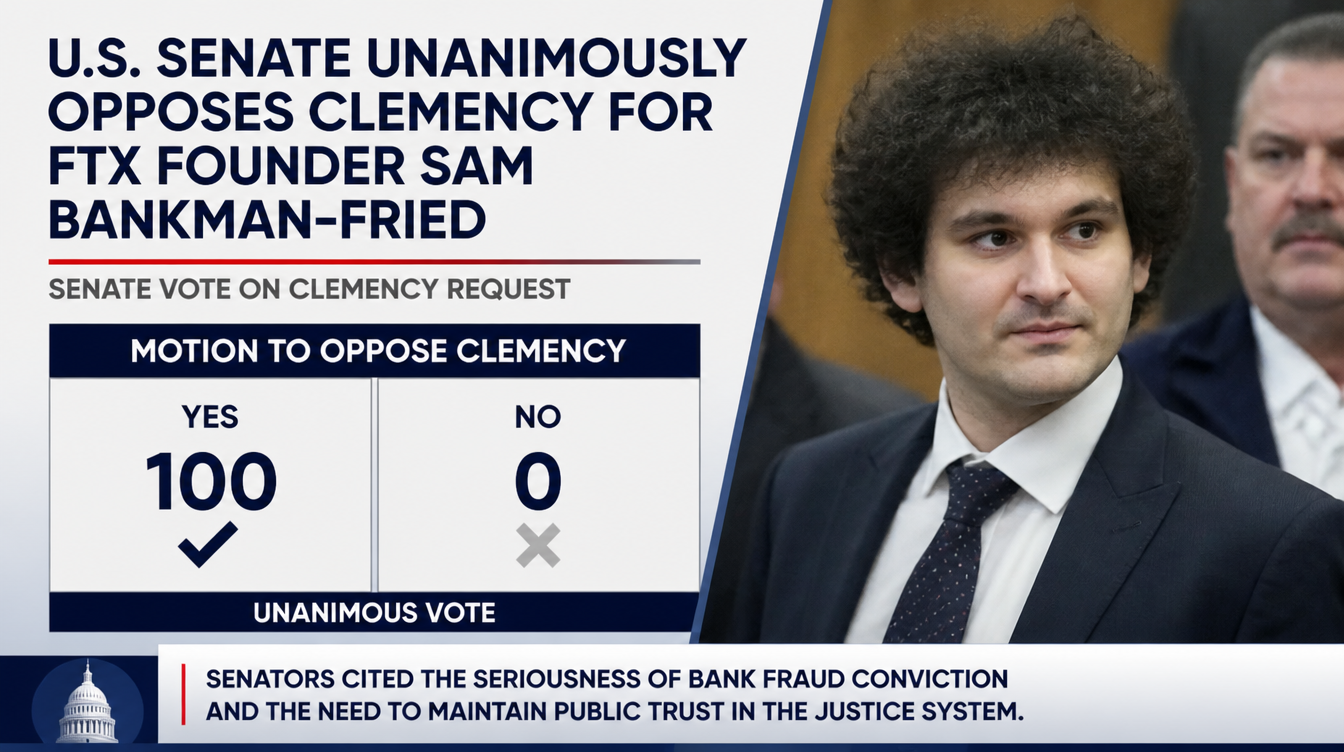
The Senate approved a nonbinding resolution without any objections after Sam Bankman-Fried sought clemency, months after former President Donald Trump pardoned several high-profile figures in the crypto space, including Changpeng Zhao and Ross Ulbricht.
Lawmakers agreed Wednesday that the FTX founder should never receive leniency, passing a measure declaring he must not be granted a pardon or sentence reduction under any circumstances.
The resolution moved forward through unanimous consent, meaning it was adopted because no senator raised opposition.
The effort was led by Senators Cynthia Lummis, a Republican from Wyoming, and Ruben Gallego, a Democrat from Arizona, who serve as the leading members of the Senate Banking Committee’s digital assets subcommittee for their respective parties.
Lummis, one of the most vocal crypto advocates in Congress, has spent years crafting legislation for the industry while also pushing to ensure one of its most notorious figures remains behind bars.
“He had his day in court,” Lummis said when introducing the measure on June 17, while Gallego underscored his stance with a brief remark: “Keep him locked up.”
Bankman-Fried is not expected to be eligible for release until about 2044. In November 2023, a jury convicted him on seven charges related to the collapse of FTX — a case prosecutors described as one of the largest financial frauds in U.S. history, with more than $8 billion in losses for American customers.
Earlier this year, Trump said he had no intention of pardoning Bankman-Fried, despite having granted clemency to Binance founder Changpeng Zhao, Silk Road creator Ross Ulbricht, and other individuals convicted of white-collar crimes.
Bankman-Fried simultaneously ran FTX, a crypto exchange responsible for safeguarding customer funds, and Alameda Research, a trading firm he also owned. He transferred billions of dollars in customer deposits from FTX to Alameda, which then used the funds for trading, venture investments, political contributions, and real estate purchases in the Bahamas. Alameda was also given preferential treatment within FTX’s system, allowing it to bypass safeguards that applied to other traders.
The situation unraveled in November 2022 after CoinDesk obtained Alameda’s balance sheet, revealing that a large share of its assets consisted of FTT, a token created and controlled by FTX.
This meant Alameda’s financial position relied heavily on a token issued by its own affiliate. The crisis deepened when Binance announced it would sell its FTT holdings, triggering a steep decline in the token’s value.
As panic spread, customers rushed to withdraw their funds, but FTX was unable to meet the demand because the money had already been used. The exchange filed for bankruptcy on Nov. 11, 2022, just over a week after the report emerged.