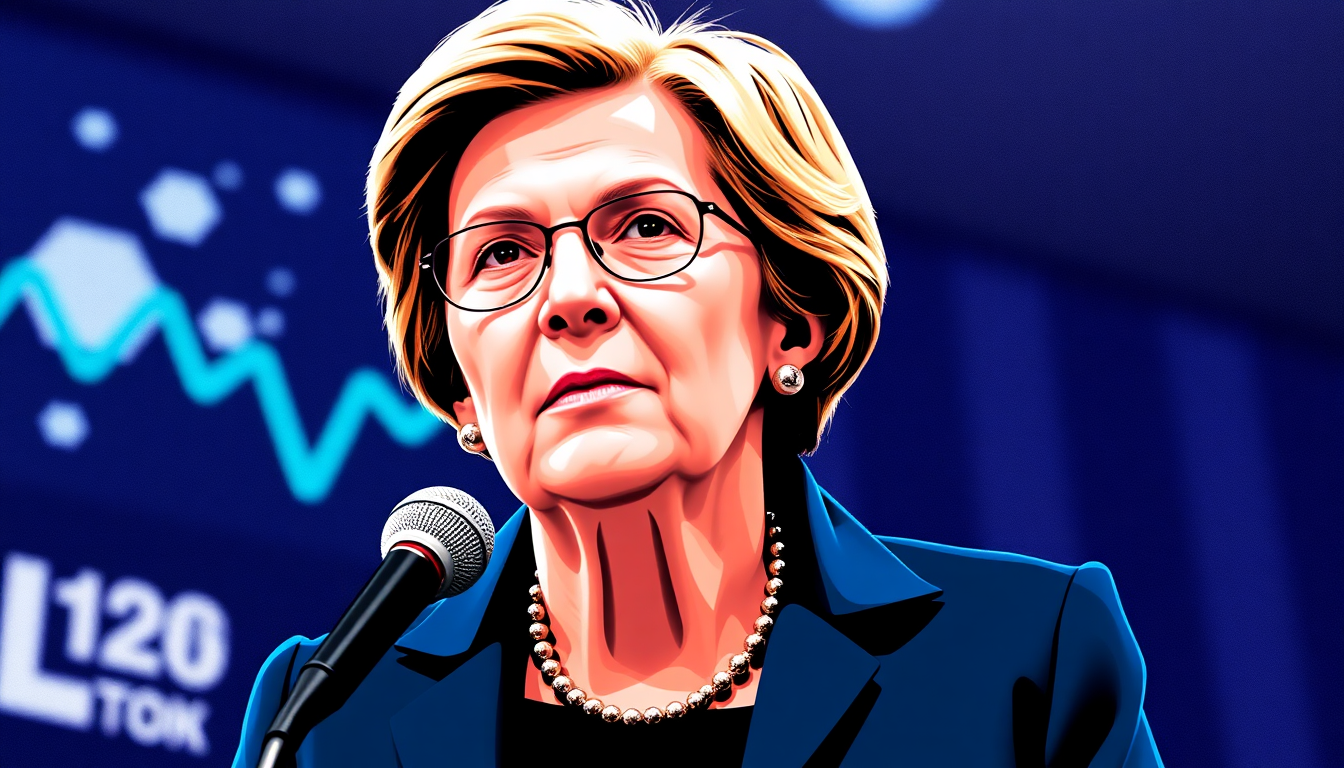
Elizabeth Warren could soon become the chair of the Senate Banking Committee, giving one of Washington’s most prominent financial regulation advocates greater influence over America’s financial policy. Her expected leadership may bring fresh challenges for Wall Street, cryptocurrency companies, and retail investors involved in day trading.
Democrats’ success in securing control of both congressional chambers in the November 2026 midterm elections is expected to strengthen Warren’s ability to investigate financial institutions and scrutinize federal regulators. Her regulatory priorities could cover a wide range of issues, including brokerage platforms, trading infrastructure, and prediction markets.
The Massachusetts senator has repeatedly argued that financial markets require stronger oversight to protect individual investors. Leading the Senate Banking Committee would provide her with greater authority to advance that agenda through investigations, congressional hearings, and potential legislative changes.
Warren’s Financial Oversight Plans Put Retail Trading in Focus
Concerns surrounding day trading go beyond investors’ ability to purchase and sell stocks. The broader issue involves how financial markets process retail orders, establish execution prices, and direct transactions between brokers, exchanges, and market makers.
Warren has already become involved in this regulatory discussion. On October 1, she joined four Democratic senators in urging SEC Chairman Paul Atkins to preserve key safeguards under the Regulation National Market System.
The senators challenged proposed changes to Rules 611 and 610(e), arguing that weakening these protections could expose retail investors to unfavorable execution prices. They warned that large financial institutions could gain an advantage while ordinary traders potentially pay more to execute their orders.
These rules are particularly important for people using day trading platforms. Active traders depend on efficient order execution, competitive prices, and sufficient market liquidity, especially during periods of heightened volatility.
Warren’s intervention indicates that the structure of retail trading markets is already among her areas of concern. As committee chair, she could increase pressure on the SEC to explain how brokers, exchanges, and market-making firms handle orders placed by individual investors.
Still, there is no confirmed indication that Warren intends to introduce a direct ban on day trading or impose limits on how frequently Americans can trade stocks.
Cryptocurrency and Prediction Markets Could Become Major Targets
Warren’s potential regulatory agenda extends beyond traditional stock trading. She has also questioned the rapid growth of prediction markets, particularly the risks of insider trading involving contracts linked to political decisions, economic developments, and other public events.
The Wall Street Journal reported that Warren plans to investigate suspected insider activity in prediction markets, while also examining private equity firms, major banks, and cryptocurrency businesses. Democrats are additionally preparing investigations into alleged financial relationships involving the crypto industry, Donald Trump, and his family.
Her expected leadership of the Senate Banking Committee could provide a stronger platform to examine financial arrangements connecting cryptocurrency companies with the president.
Such investigations could increase regulatory pressure on businesses with political ties. They could also complicate the industry’s efforts to advance cryptocurrency market structure legislation by shifting congressional attention toward broader financial investigations.
The impact on day trading platforms may be less immediate but could still become significant. Congressional scrutiny of trading protections, financial intermediaries, and prediction markets could eventually shape the rules governing how these businesses operate.
Warren’s critics argue that expanding regulatory oversight could increase operating costs, discourage innovation, and reduce competition across financial markets. Her supporters maintain that stronger protections are necessary to prevent market manipulation and ensure ordinary investors receive fair treatment.
The key question now is how far Warren will go in using the Senate Banking Committee’s authority. Control over hearings, investigations, and legislative priorities could give her considerable influence over the future regulatory landscape for Wall Street, cryptocurrency companies, and retail trading platforms.