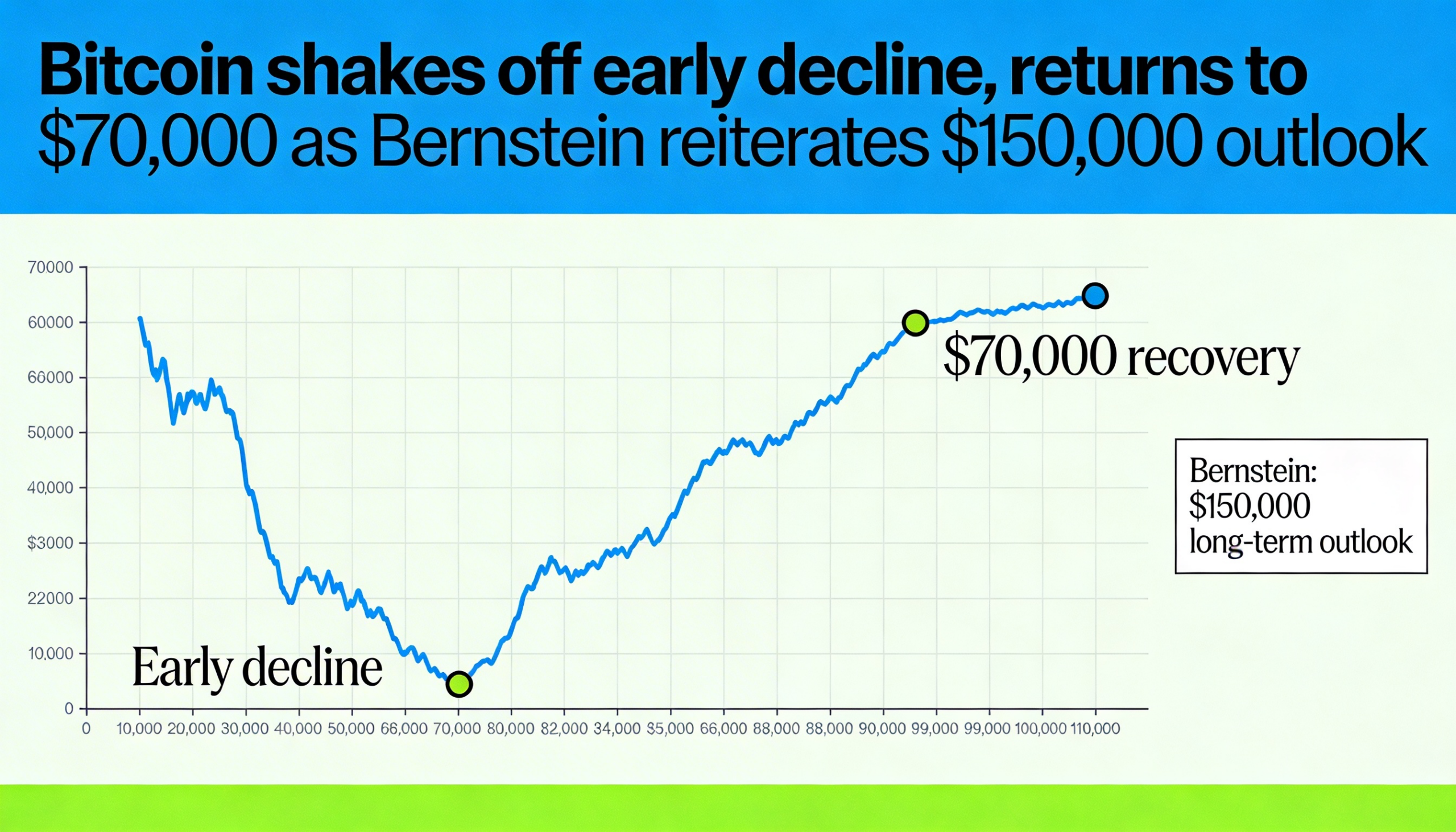
Bitcoin is extending its losses following the release of the latest Federal Open Market Committee (FOMC) minutes, with gold, crude oil and parts of the US stock market also facing selling pressure. Investors are increasingly concerned that the Federal Reserve could keep monetary policy restrictive for longer, particularly after officials signaled that further interest rate increases remain a possibility.
The October meeting minutes showed that almost all policymakers considered additional rate hikes appropriate under their baseline economic expectations. Two officials also discussed the possibility of a larger increase if inflation proves more persistent than anticipated.
The hawkish outlook triggered declines across several major asset classes. Bitcoin lost around 3.2% over 24 hours, gold futures dropped more than 3%, and West Texas Intermediate (WTI) crude fell approximately 3%. Meanwhile, the US dollar strengthened to a 19-month high. US equities were mixed, as the Nasdaq ended higher while the Dow Jones and S&P 500 closed lower.
The latest developments have revived comparisons with March 2020, when the Federal Reserve and US government introduced extraordinary measures to stabilize the economy. During that crisis, the Fed slashed interest rates, launched large-scale bond-buying programmes and supplied emergency liquidity. Congress also passed a $2.2 trillion relief package to help households and businesses withstand the economic shutdown.
The challenge facing markets today is considerably different. Instead of cutting borrowing costs to support growth, the Federal Reserve is considering whether additional tightening may be necessary to contain inflation.
Fed Minutes Reveal Concerns About Inflation, Hedge Funds and AI Debt
Although the Federal Reserve maintained its benchmark interest rate at 3.75%–4% during the October meeting, the minutes revealed that policymakers were not ruling out further increases. Nearly all participants believed higher rates could be justified under their baseline projections, while two officials supported considering a move larger than the standard 25 basis points if inflation data surprised to the upside.
The discussion also extended beyond interest rate policy. Officials highlighted growing risks associated with hedge fund leverage and borrowing linked to artificial intelligence infrastructure investments.
Policymakers are concerned that some financing arrangements could become vulnerable if investor confidence in AI-related spending weakens. Companies and investors have committed substantial capital to AI infrastructure, but questions remain about whether the resulting revenue and returns will justify those investments.
A deterioration in confidence could trigger forced selling. Highly leveraged hedge funds facing losses or investor withdrawals might need to liquidate assets quickly to meet their financial obligations. Such activity could increase market volatility and create additional downward pressure on already struggling assets.
Gold is also experiencing pressure from rising bond yields and dollar strength. Higher interest rates increase the opportunity cost of holding an asset that does not generate regular income, while a stronger dollar makes gold more expensive for international buyers.
Bitcoin faces a similar challenge as investors reduce exposure to volatile and speculative assets when expectations for tighter monetary policy increase.
Despite these vulnerabilities, the Fed has not described the financial system as being in crisis. Its assessment characterized the US banking sector as resilient, although officials acknowledged that certain market exposures could amplify financial stress if conditions deteriorate.
How the Fed and US Government Responded to the March 2020 Crisis
The economic shock in March 2020 was extraordinary. COVID-19 restrictions forced businesses to suspend operations, disrupted employment and brought significant parts of the global economy to a standstill. Investors rushed toward cash, triggering widespread liquidations across financial markets.
Bitcoin experienced one of its sharpest short-term declines, briefly falling below $4,000 after trading near $10,000 only a few weeks earlier.
The Federal Reserve responded through emergency monetary policy measures. It announced a 50-basis-point rate cut on March 3, followed by a further 100-basis-point reduction on March 15. This brought the federal funds target range down to 0%–0.25%.
On March 23, the central bank announced unlimited purchases of Treasury securities and mortgage-backed securities to restore market functioning. It also established emergency lending facilities to support businesses, financial institutions and credit markets.
Four days later, President Donald Trump signed the $2.2 trillion CARES Act into law.
The legislation included direct payments to eligible Americans, expanded unemployment benefits and financial assistance for businesses affected by pandemic restrictions. The Paycheck Protection Program provided loans to small businesses to help them maintain payrolls and avoid laying off employees.
The massive intervention helped stabilize an economy facing an unprecedented shutdown. Millions of Americans were unemployed, businesses were struggling to survive, and ordinary commercial activity had been severely disrupted.
Financial markets subsequently recovered. The S&P 500 regained its pre-pandemic record high by August 2020, while Bitcoin climbed above $12,000 during the same month.
Could Another $2.2 Trillion Government Rescue Be Necessary?
Repeating the 2020 response would be difficult under current economic conditions. Inflation remains above the Federal Reserve’s 2% objective, meaning policymakers cannot easily justify returning interest rates to zero or introducing another enormous liquidity programme.
Although aggressive monetary easing and government spending could support asset prices, they could also increase inflationary pressures. Another multitrillion-dollar relief package would also require a compelling economic justification and face substantial political debate in Congress.
However, the Federal Reserve has other options if financial conditions become more dangerous.
Should banks experience funding shortages or credit markets begin to freeze, the central bank could deploy targeted emergency lending programmes and liquidity facilities. These interventions could address specific financial stability problems without requiring the extensive monetary stimulus introduced during the pandemic.
The growing use of leverage among hedge funds and the financing structures supporting AI investments are particularly important areas to monitor. If falling asset prices trigger widespread liquidations, financial stress could spread beyond individual markets.
There is an important distinction between a normal market correction and a broader financial crisis driven by forced selling and funding problems.
For now, the available evidence does not suggest that the US economy is facing a repeat of March 2020. The banking system remains resilient, and weakness in Bitcoin, gold or equities does not automatically justify another government bailout.
Nevertheless, the Federal Reserve faces a difficult policy challenge: maintaining financial stability without abandoning its efforts to control inflation.
In 2020, policymakers responded with emergency rate cuts, unlimited asset purchases and a $2.2 trillion fiscal rescue. The current environment may demand a more targeted strategy. Investors will be watching whether the Fed can contain financial risks while maintaining restrictive monetary conditions, as Bitcoin and other risk assets remain sensitive to every shift in interest rate expectations.