Nasdaq 100 futures climbed 1.5%, boosted by Microsoft’s strong premarket performance after the company reported its fastest cloud expansion in four years while maintaining control over expenses.
Markets also received a modest inflation tailwind. The Core Personal Consumption Expenditures (PCE) Price Index for June rose 0.1%, beating expectations for a 0.2% increase and slowing from May’s 0.3% gain.
On a yearly basis, core PCE inflation increased 3.3%, matching estimates and easing from the previous month’s 3.4% reading.
Although the PCE index is one of the Federal Reserve’s key inflation gauges, the data reflects June conditions as investors prepare to move into August.
Additional economic figures showed weaker-than-expected growth. The first estimate for second-quarter GDP came in at a 1.5% annualized rate, below forecasts of 2.1%. Weekly jobless claims also increased slightly, rising to 197,000 from 188,000 previously.
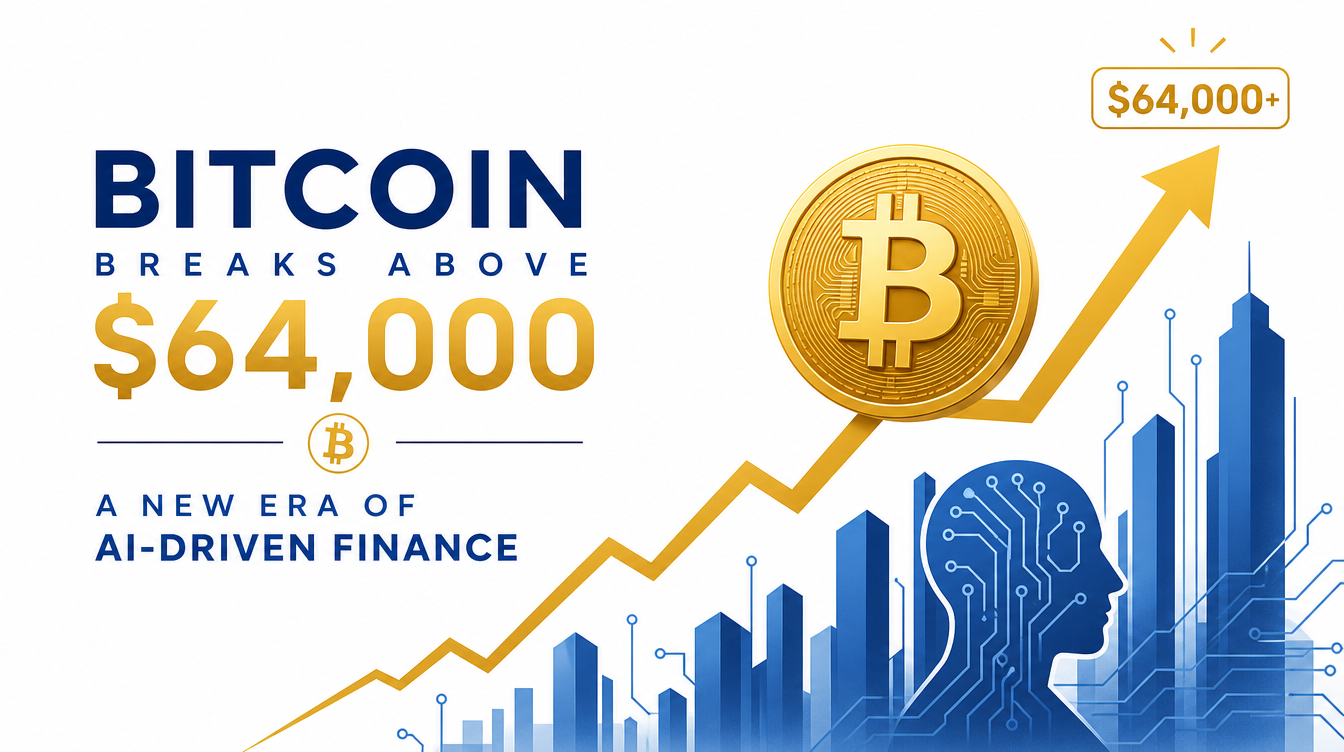
Despite the mixed data, markets remained relatively steady. Bitcoin moved slightly higher toward $64,800, while Nasdaq futures gained 1.7% following Microsoft’s earnings-driven rally.
Treasury yields edged higher as investors continued to assess the Fed’s decision to keep interest rates unchanged and recent comments from Fed officials.
Aave Weighs Exiting Six Blockchain Networks
Decentralized lending protocol Aave is considering removing support for six networks—Sonic, Scroll, zkSync, Metis, Soneium, and Aptos—after declining activity caused revenue to fall below maintenance costs.
The governance proposal involves $98.1 million in supplied assets and $15.6 million in debt across Aave markets. The six targeted networks account for $12.8 million in supplied assets and $4.1 million in outstanding loans.
Several deployments have experienced steep declines, with Sonic deposits falling 74% over six months to $7.6 million and Scroll deposits dropping 86% to $2.2 million.
Under the proposal, Aave would stop new borrowing and lending activity, lower supply and borrowing limits, and raise interest rates to encourage users to repay loans and withdraw assets from the affected networks, each of which generates less than $5,000 in protocol revenue.
Bank of England Maintains 3.75% Rate
The Bank of England’s Monetary Policy Committee voted to keep its benchmark interest rate unchanged at 3.75%, citing a faster-than-expected decline in inflation to 2.6%.
However, policymakers warned inflation could pick up later this year due to rising energy costs linked to ongoing Middle East tensions.
The decision passed by a 6–3 vote, with three officials pushing for a rate increase to 4%. This was a narrower split than the previous meeting’s 7–2 vote.
Real Treasury Yields Reach Highest Level Since 2008
The inflation-adjusted yield on the U.S. 30-year Treasury note approached 3%, reaching levels not seen since 2008.
The increase means investors can earn nearly 3% above inflation by holding long-term government debt, making non-yielding assets such as bitcoin and gold less attractive and potentially creating pressure on riskier investments like technology stocks.
A continued rise in real yields could become a challenge for broader risk markets.
Dollar Slides Despite Fed’s Hawkish Message
The U.S. Dollar Index declined to 100.67, extending its previous drop even after the Federal Reserve kept rates steady in what analysts called a “hawkish hold.”
Meanwhile, uncertainty around inflation and future policy pushed longer-term Treasury yields higher, with the 30-year yield reaching 5.24%, its highest point since 2007.
A weaker dollar can support bitcoin demand, while elevated yields may weigh on the asset.
Bitcoin Follows AI-Led Stock Market Momentum
Bitcoin traded around $63,900 on Thursday, slipping slightly as U.S. equity futures gained following Microsoft’s strong earnings report.
S&P 500 futures rose 0.2%, while Nasdaq 100 futures advanced 0.4%. Microsoft shares jumped 8% before the open after its cloud business posted its strongest growth in four years without a major increase in spending.
The results reassured investors that artificial intelligence investments are beginning to generate returns, contrasting with concerns raised after Alphabet increased its spending outlook.
Bitcoin has continued to move alongside AI and semiconductor stocks, tracking broader technology market sentiment rather than crypto-specific developments.