Although the Fed is expected to leave interest rates unchanged, markets are closely watching for signs that the new chair may begin reshaping the central bank’s communication strategy.
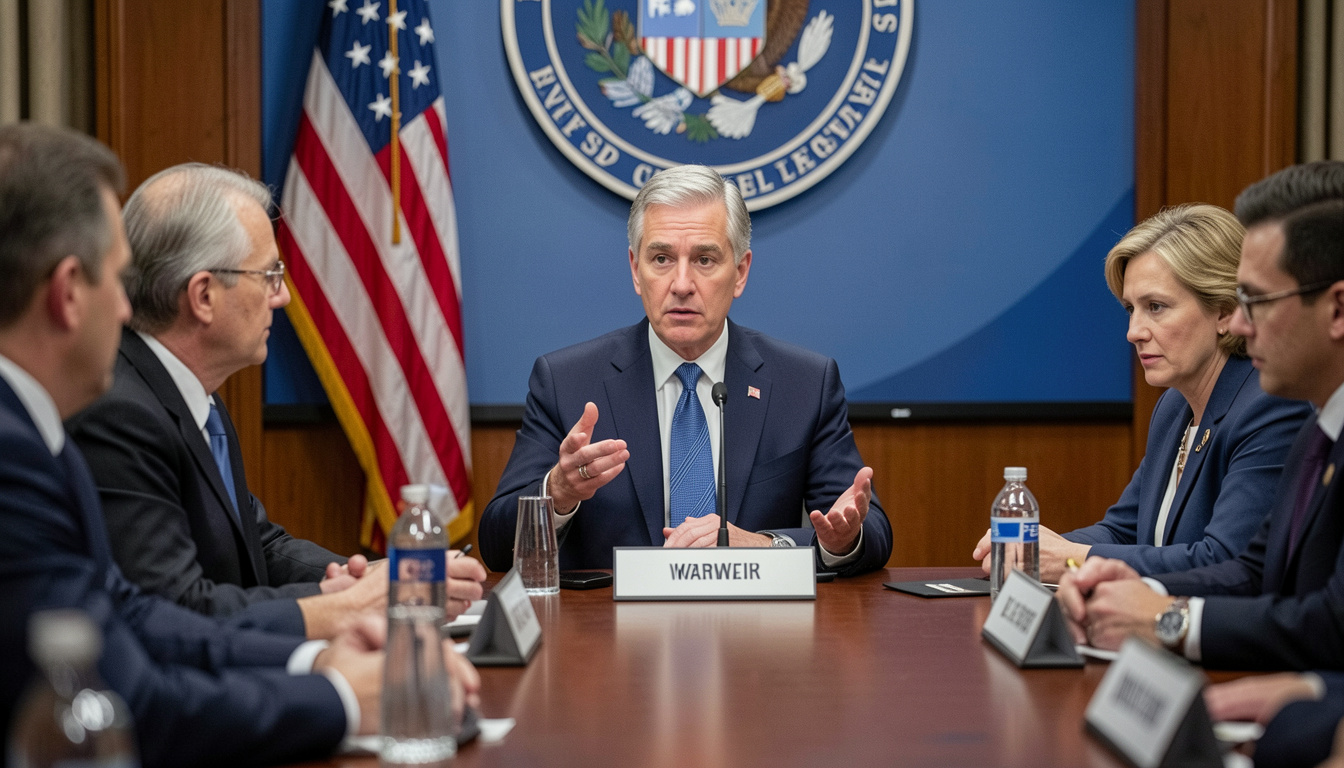
Federal Reserve Chair Kevin Warsh is leading his first two-day policy meeting, set to conclude today, with investor attention shifting away from the rate decision itself toward how he plans to guide market expectations going forward.
Markets broadly anticipate the benchmark rate will remain within the 3.50%–3.75% range.
Even so, Bank of America expects a more hawkish tone from Warsh and fellow policymakers, reflecting stronger-than-expected economic data and persistent inflation pressures.
The bank also sees the Fed potentially dropping language that signals a bias toward future rate cuts and upgrading its view of the labor market after recent upside surprises in payroll data. Markets have already moved in that direction, pricing in a high likelihood of at least one rate hike this year.
Still, the central focus is Warsh himself.
He has long criticized the Fed’s reliance on forecasts, speeches, and forward guidance. A recent Wall Street Journal profile highlighted his blunt advice to policymakers: reduce communication and focus more on analysis.
That philosophy could influence this meeting. Bank of America noted that Warsh may choose not to submit his own projections to the Summary of Economic Projections (SEP), reinforcing his skepticism toward the Fed’s forecasting framework.
Warsh has previously argued that if forecasting tools prove unreliable, they should be used less frequently. The SEP’s “dot plot,” which outlines policymakers’ rate expectations, remains a key element of Fed communication, with projections expected to show rates holding steady through 2026 before gradual cuts in 2027 and 2028.
Policymakers are also expected to acknowledge rising inflation risks while signaling less willingness to overlook price shocks than in recent years.
Warsh’s first press conference as chair is likely to draw intense scrutiny. He is expected to strike a patient tone, suggesting that inflation pressures tied to geopolitical tensions, including the Iran conflict, may prove temporary, while avoiding any indication that rate cuts are imminent.
Markets remain divided over whether Warsh will ultimately lean more hawkish or dovish than his predecessor, Jerome Powell. According to Bank of America, that uncertainty represents a key risk for investors.
A more hawkish-than-expected stance could boost the U.S. dollar and weigh on equities and bonds. At the same time, investors will be watching whether Warsh uses this meeting to begin a broader shift in how the Fed communicates after years of heightened transparency.
Bitcoin, down about 25% year-to-date, has also declined since Warsh took office on May 22, as geopolitical tensions, particularly the U.S.-Iran conflict, continue to overshadow domestic economic policy.