Bhutan is continuing to scale back its once-ambitious bitcoin strategy, gradually liquidating a large हिस्से of its holdings.
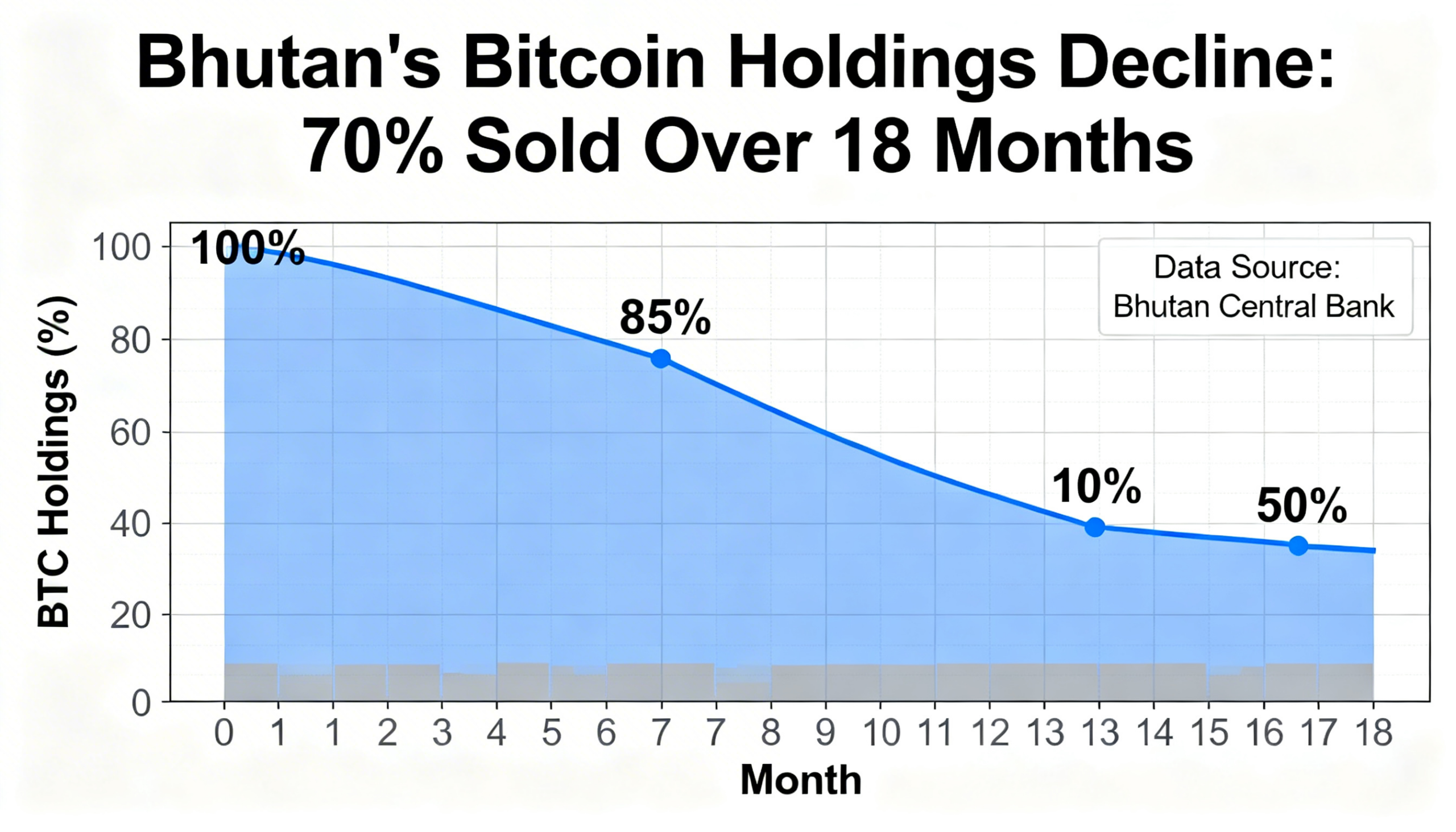
The country’s reserves have declined from around 13,000 BTC in October 2024 to 3,954 BTC today—a roughly 70% drop over an 18-month period. On-chain data shows that $215.7 million worth of bitcoin has been moved out of Bhutan-linked wallets in 2026 alone. Its last mining-related inflow above $100,000 was recorded more than a year ago, pointing to a potential halt in mining activity.
The latest transaction occurred Thursday, when Bhutan transferred approximately 319.7 BTC, valued at $22.68 million, according to Arkham Intelligence. Of that, about 250 BTC was sent to a wallet historically used for routing funds to Galaxy Digital and OKX, suggesting a likely path toward liquidation. The remaining 69.7 BTC was moved to a newly created, unidentified address.
These transfers reflect a broader pattern of steady selling.
Bhutan’s bitcoin holdings were originally built through a state-backed mining initiative powered by hydropower, managed by Druk Holding and Investments, the country’s sovereign wealth fund. The effort was widely seen as a pioneering example of sovereign bitcoin mining, leveraging renewable energy and a relatively unconstrained financial system.
However, the strategy has since shifted toward distribution rather than accumulation. Current holdings are valued at approximately $280.6 million, with a significant portion of recent outflows directed to unlabeled wallets, making the final destination of funds less clear.
The pivot away from mining and long-term holding highlights the operational and financial pressures of sustaining a sovereign bitcoin position during extended market downturns. It also illustrates the disconnect between bitcoin’s narrative as a strategic reserve asset and the realities of managing volatility at the national level.
With just 3,954 BTC remaining, Bhutan’s position is now relatively small compared to corporate buyers. At times, Strategy has accumulated more bitcoin in a single week than Bhutan currently holds—signaling a broader shift in market influence from governments experimenting with mining to institutions aggressively accumulating supply.