Here’s another rewritten version with a tighter, more neutral newsroom tone:
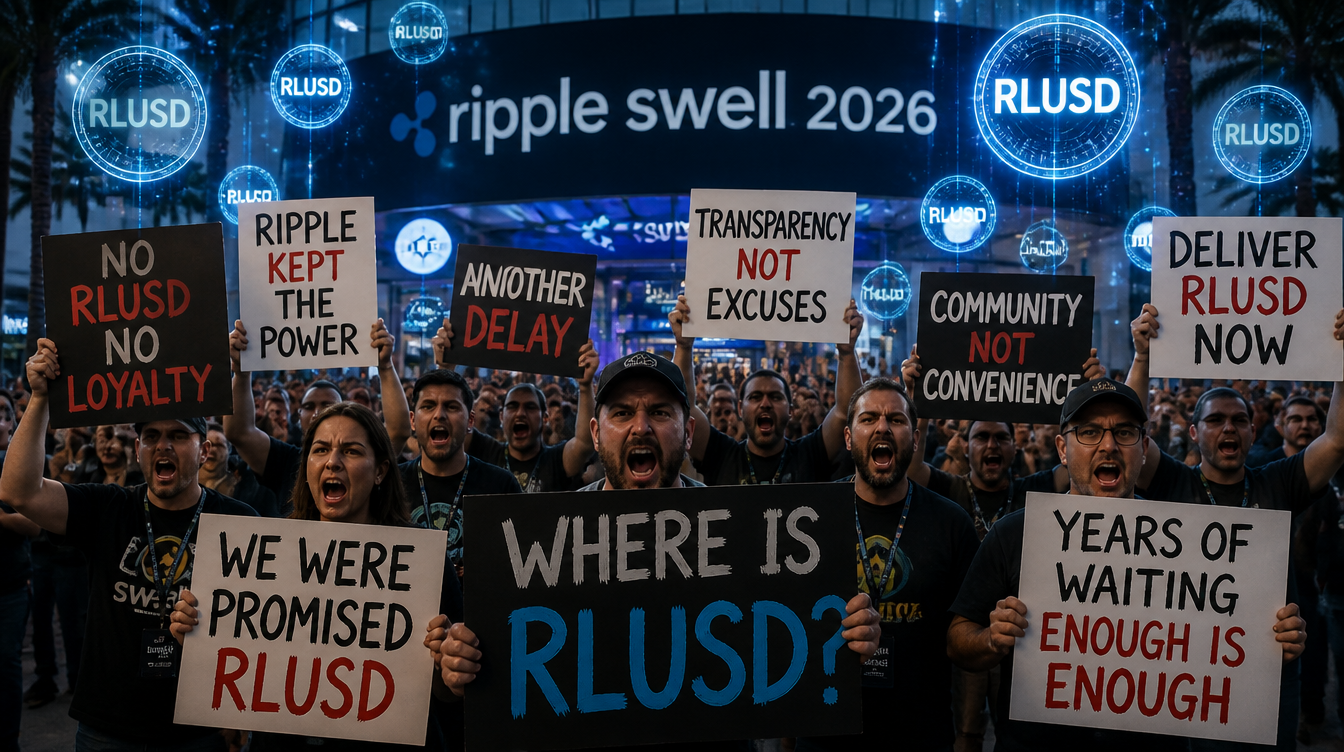
The XRP community reacted strongly to the Ripple Swell 2026 announcement, with retail holders quickly voicing criticism across the @RippleSwell thread. Instead of focusing on the event’s scale—such as 1,500 expected attendees and the integration of the XRPL Apex summit—much of the response centered on frustration that Ripple’s flagship conference appears to prioritize RLUSD while XRP’s price performance remains subdued.
Many community members argued that Ripple’s USD-backed stablecoin is receiving greater emphasis than XRP, which they believe should remain the ecosystem’s primary focus. Some users directed criticism toward Ripple leadership, including CEO Brad Garlinghouse, with sentiment ranging from disappointment to sharp backlash.
At the center of the concern is a growing view that Ripple is building an institutional strategy around RLUSD, while XRP holders see limited direct benefit as the token continues to lag.
Swell 2026 scope
Swell 2026 will take place from October 27–29 at The Shed in Hudson Yards, New York City. For the first time, Ripple is merging its developer-focused XRPL Apex event with its main Swell conference. The combined event is expected to attract more than 1,500 attendees, over 75 speakers, and 50-plus sessions spanning finance, blockchain infrastructure, and digital assets.
The agenda includes themes such as payments, tokenization, decentralized finance, AI applications, interoperability, and stablecoins. RLUSD’s role in institutional payments and treasury use cases is expected to be a key focus.
Ripple CEO Brad Garlinghouse highlighted the XRP Ledger surpassing 4 billion transactions as evidence of increasing institutional readiness.
He said, “I’ve been in crypto long enough to know when a moment is real,” framing Swell 2026 as a milestone for adoption, though without directly addressing XRP price implications.
XRP holder sentiment
Community frustration has broadened beyond isolated posts, with many retail holders expressing concern that Ripple is prioritizing RLUSD and enterprise partnerships while XRP continues to underperform relative to broader corporate progress.
Some responses included direct criticism of Ripple’s leadership, with long-term holders arguing they are being sidelined despite their role in supporting the ecosystem.
Calls for XRP token burns have also re-emerged, though Ripple has consistently rejected supply-reduction mechanisms.
The contrast between RLUSD-focused messaging and limited XRP-specific emphasis has reinforced perceptions among some holders that Ripple’s strategic priorities are shifting.
Overall, the intensity of sentiment stands out given XRP’s historically active retail base. Elevated negative reactions around major Ripple events can influence social metrics and potentially weigh on short-term market sentiment.