Here’s a refined rewrite with a crisp, professional tone and smoother flow:
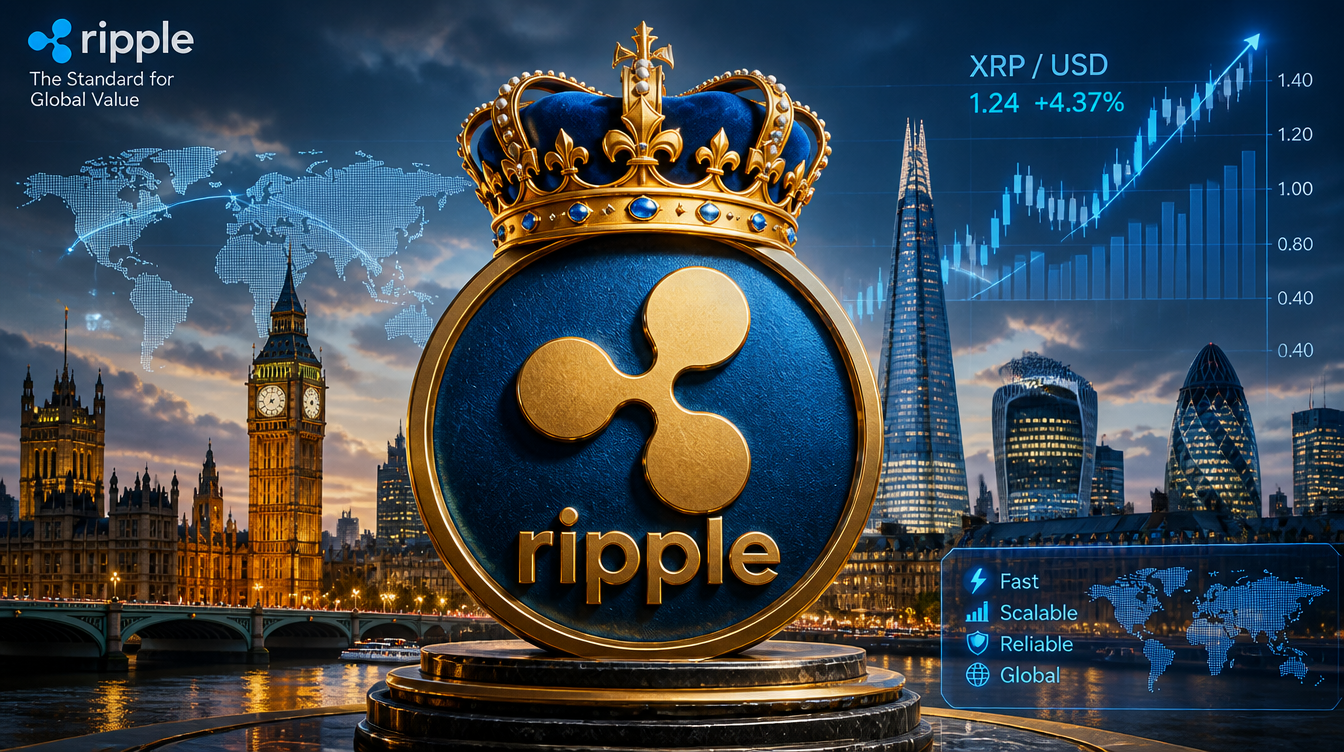
Ripple Labs has joined the UK HM Treasury’s Wholesale Digital Markets taskforce, a 54-member initiative projecting that tokenized wholesale finance could add up to £33 billion annually to the UK economy by 2035. Its inclusion alongside major financial institutions highlights that the effort is rooted in traditional finance, not driven solely by crypto-native firms.
Ripple’s role is that of a participant rather than a lead advisor or pilot operator. With over 50 organizations involved, the company has a seat at the table as standards for tokenized wholesale markets are developed, but it does not direct the initiative.
XRP News: Scope of the Taskforce
The £33 billion estimate comes from HM Treasury’s own projections, not Ripple, although the firm referenced it in its public statement.
In a post on X, Ripple pointed out that on-chain instruments such as funds, bonds, and repurchase agreements are already being used. It argued these solutions can enable faster settlement and lower costs compared to traditional systems, while highlighting the UK’s mature capital markets and regulatory credibility as key advantages in becoming a global hub for tokenized finance.
Regulatory Context and Global Implications
The taskforce also carries broader strategic weight. If tokenization frameworks in the UK and U.S. begin to align—and if cross-border repo and collateral settlement emerge as key use cases—existing institutional payment infrastructure could become more directly relevant. Ripple’s involvement reflects a strategy to help shape these developments early as the market expands.
Stakeholder feedback on the taskforce’s priorities and timeline is open through September 4.
SEC Case Background and XRP Setup
Ripple also shared new details about the pressure it faced after the SEC filed its lawsuit in December 2020. CEO Brad Garlinghouse said leadership briefly considered shutting down operations, including distributing XRP holdings to shareholders and dissolving the company involved in the case.
CTO David Schwartz later noted that external legal advisors initially believed the business might not survive and suggested pursuing a settlement to protect executives. Ripple ultimately spent around $150 million on legal costs over the four-year case.
Schwartz later clarified that his remarks had been misinterpreted, emphasizing that Ripple was not close to shutting down. Even so, these disclosures illustrate the legal overhang that influenced XRP’s price during that period.
From a technical standpoint, XRP continues to hold above the $1.04–$1.11 support range. Both the recent rally and pullback formed three-wave patterns, which do not yet confirm a sustained bullish structure.
Holding this support could open the path toward $1.19 and $1.25, while a breakdown would reinforce the broader downtrend. XRP is up 3.89% year-to-date in 2026, continuing a streak of annual gains: 47.6% in 2023, 31.2% in 2024, and 35% in 2025.
The UK taskforce development strengthens Ripple’s institutional positioning but does not immediately alter XRP’s near-term technical outlook. The key question is whether early involvement in a government-backed tokenization initiative—alongside institutions managing trillions—will translate into real adoption when the pilot launches in 2027.