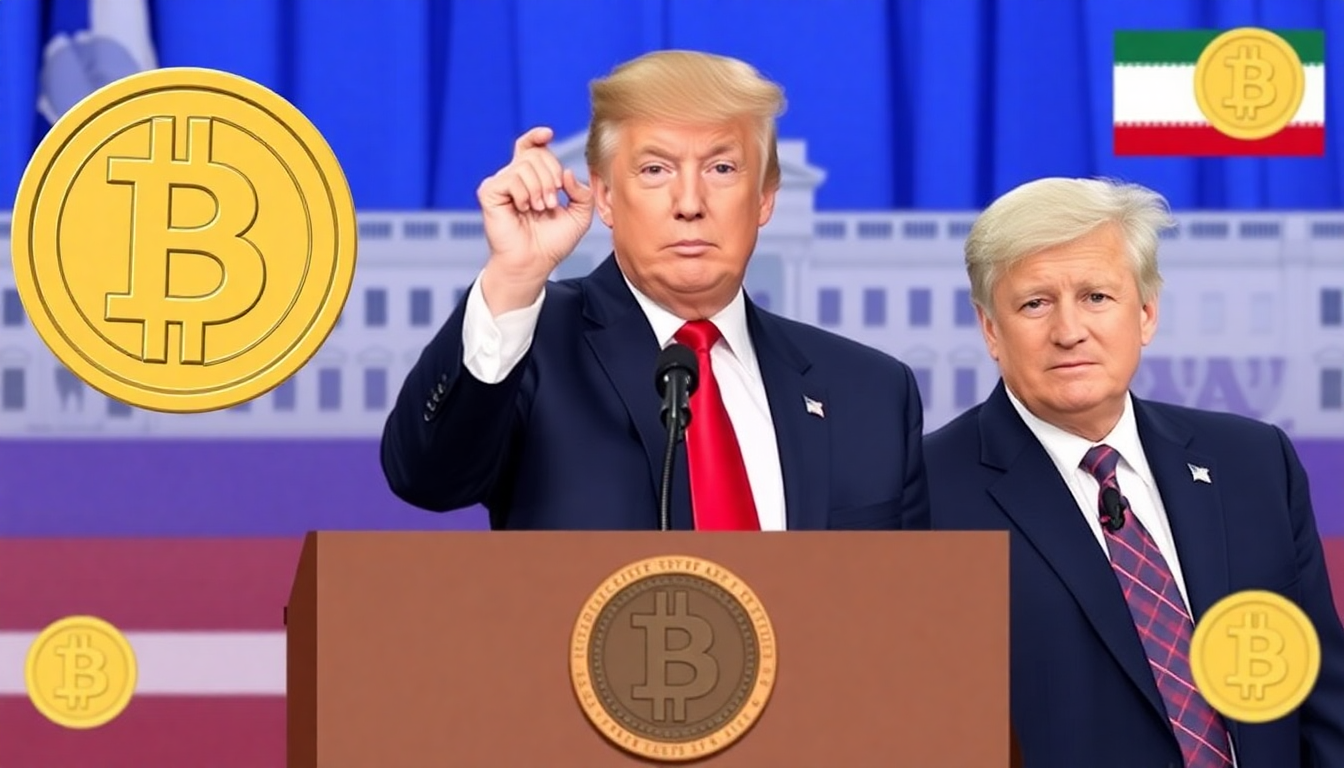
Crypto Faces Three Midterm Election Risks, From Trump’s $5,000 Dividend to Iran Tensions
The US midterm elections on November 3 present a significant political test for the cryptocurrency market, with the results potentially influencing regulatory policy, expectations for government stimulus, and investor appetite for risk.
Republicans are seeking to maintain their majorities in Congress, while Democrats are attempting to regain control of at least one chamber. The outcome could determine whether President Donald Trump can push forward with his economic agenda or encounters greater resistance from lawmakers.
For the crypto industry, three developments are particularly important: Trump’s proposed $5,000 stimulus dividend, the fate of delayed cryptocurrency legislation, and rising tensions between the United States and Iran.
Although the election results may not immediately alter crypto market fundamentals, they could influence expectations surrounding liquidity, regulation, and broader financial conditions.
Trump’s $5,000 Stimulus Proposal Could Boost Market Liquidity
Trump has pledged to distribute a $5,000 dividend to adult US citizens if Republicans retain control of both the House and Senate. The proposed payments could reach approximately 240 million adults, putting the potential cost at around $1.2 trillion. Trump has also indicated that tariff revenue could provide funding for the initiative.
A Republican victory could strengthen expectations of increased household spending and potentially bring additional liquidity into financial markets. Crypto investors have a reason to monitor such developments, given the market’s historical response to large-scale stimulus programs.
During the COVID-19 pandemic, government stimulus payments coincided with unprecedented monetary easing and a substantial rally across cryptocurrency markets. A Federal Reserve Bank of Cleveland study found that the 2020 stimulus checks increased Bitcoin purchasing volume by 3.8%, although their direct impact on prices was relatively limited.
The broader crypto rally of 2020 and 2021 also benefited from historically low interest rates, growing institutional participation, and abundant market liquidity. A fresh round of government payments could similarly encourage retail investors to put more capital into Bitcoin and other risk-sensitive assets.
However, Trump’s proposed dividend has not received approval. Any increase in inflation expectations or Treasury yields could also reduce its potential positive impact on markets. If Democrats gain control of Congress, the proposal could face significant legislative obstacles.
Crypto Legislation Reaches a Critical Midterm Crossroads
The election could also influence the future of the Digital Asset Market CLARITY Act, one of the most closely watched cryptocurrency regulatory proposals in Washington.
The legislation is designed to establish a clearer framework for digital assets and define the respective responsibilities of US financial regulators. However, progress has stalled after the bill failed to advance through a Senate procedural vote in September.
A Republican victory could improve the legislation’s prospects, although securing sufficient bipartisan backing would remain essential for overcoming the remaining hurdles.
If Democrats regain control of the House, Trump’s cryptocurrency-related business interests and campaign connections could face closer scrutiny. Greater attention to investigations and congressional oversight could push regulatory discussions further down the legislative agenda.
Nevertheless, a Democratic victory would not necessarily result in stricter rules for the crypto industry. Lawmakers from both parties have shown interest in establishing clearer digital asset regulations, meaning bipartisan cooperation could still produce legislation. The final version, however, may differ considerably from the current proposal.
Crypto Markets Face a Third Risk From Iran Tensions
The midterm election presents both opportunities and risks for digital assets. A Republican victory accompanied by stimulus optimism, progress on crypto legislation, and easing tensions with Iran could create a favorable environment for the market.
By contrast, a Democratic victory could introduce uncertainty around regulatory policy. Any further escalation in the Middle East could also weigh on cryptocurrencies, regardless of which party controls Congress.
The key question for investors is whether positive political developments can offset growing geopolitical risks.
Trump’s $5,000 stimulus promise offers a potentially bullish narrative, but the next major move in crypto may depend more heavily on actual improvements in market liquidity or the emergence of another inflationary shock.
Indeed, the most immediate threat to cryptocurrency markets may be coming from beyond Washington. The United States carried out limited strikes on Iran’s Qeshm Islands, near the strategically important Strait of Hormuz. The operation renewed concerns about a wider conflict, even as diplomatic contacts between the two sides continued.
For crypto investors, the election is therefore only one part of a broader market equation. Fiscal policy, regulatory decisions, liquidity conditions, and developments in the Middle East could all influence the direction of digital assets in the weeks ahead.