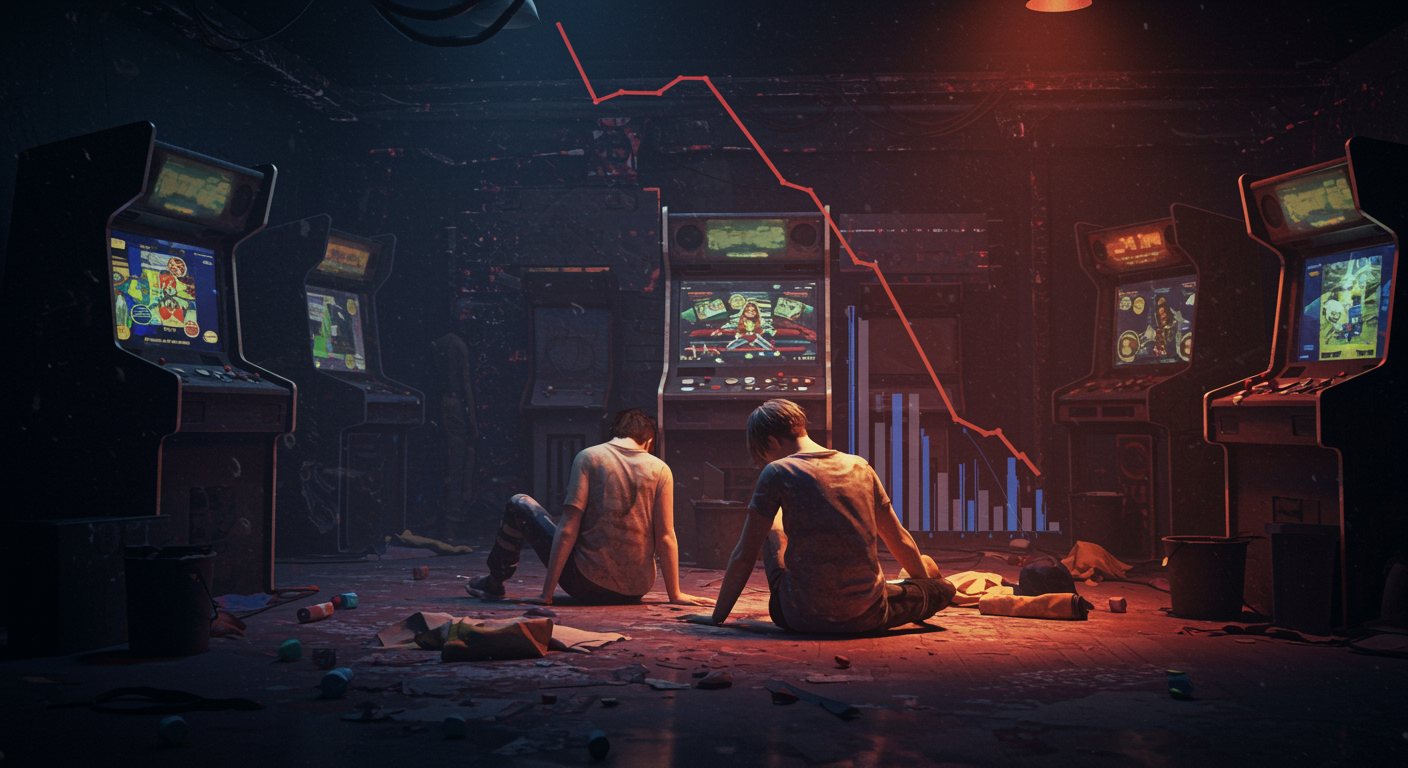
Web3 gaming’s rapid ascent has unraveled into a steep downturn, as billions of dollars in funding failed to deliver products that resonated with players.
The sector dominated Web3 venture investment in 2022, attracting about 63% of total funding. By 2025, that share had shrunk to single digits as capital rotated toward artificial intelligence, real-world asset tokenization, and layer-2 infrastructure—areas seen as offering clearer utility and adoption.
According to a report by Caladan, as much as $15 billion was funneled into GameFi, yet roughly 93% of projects have since become inactive. Token prices have dropped around 95% from their 2022 highs, while funding for gaming studios has fallen by 93%.
Much of the capital was deployed into tokens and NFTs before fully developed games were ready. As enthusiasm faded and funding dried up, more than 300 blockchain-based titles shut down, turning the sector into a textbook example of speculative excess.
“Capital was destroyed at every layer simultaneously,” the report noted, pointing to losses across venture investors, retail NFT buyers, gaming guilds, and Telegram-based tap-to-earn ecosystems. Hamster Kombat saw its user base collapse by 96% within months, while the gaming guild token YGG is now down 99.6% from its 2021 peak.
Several high-profile failures highlight the scale of the collapse. Pixelmon raised $70 million through an NFT sale but has yet to release a playable game. Ember Sword spent $18 million over seven years before shutting down without refunds. Gala Games is facing legal action tied to alleged misuse of $130 million in tokens, and Square Enix quietly discontinued its Symbiogenesis project.
The data suggests the downturn was not just cyclical but structural. GameFi’s play-to-earn model—built around financial rewards—failed to align with what gamers actually want: engaging entertainment.
At its core, the model relied on a self-sustaining loop where players bought tokens or NFTs, earned rewards in the same assets, and profited as long as new users entered the system. Once growth slowed, token prices declined, rewards diminished, and users exited, causing entire in-game economies to unravel.
Axie Infinity, once the sector’s flagship, illustrates the decline. Daily active users have dropped from around 2.7 million at peak to roughly 5,500, according to DappRadar.
Even during the boom, adoption remained limited. A Coda Labs survey cited by Caladan found that only 12% of gamers had ever tried a crypto game, highlighting the gap between investor expectations and real user demand.
Funding dynamics worsened the issue. Many studios secured large amounts of capital before releasing viable products, reducing the urgency to build games capable of retaining players.
The shift in investment trends underscores the change in sentiment. While gaming once dominated Web3 funding, by 2025 capital had moved into AI, real-world assets, and infrastructure. Animoca Brands, one of the sector’s biggest backers, has cut gaming exposure to about 25% of its portfolio while pivoting toward stablecoins, RWAs, and AI.
Long development cycles also clashed with fast-moving token markets. Projects often took years to build, while their tokens traded continuously, requiring sustained hype. By the time many games launched, their tokens had already lost most of their value.
The result is a sector that expanded rapidly on speculative demand and contracted just as quickly when that demand disappeared. With hundreds of projects shuttered and investment shifting elsewhere, Web3 gaming now stands as a cautionary tale of what happens when financial engineering runs ahead of product-market fit.