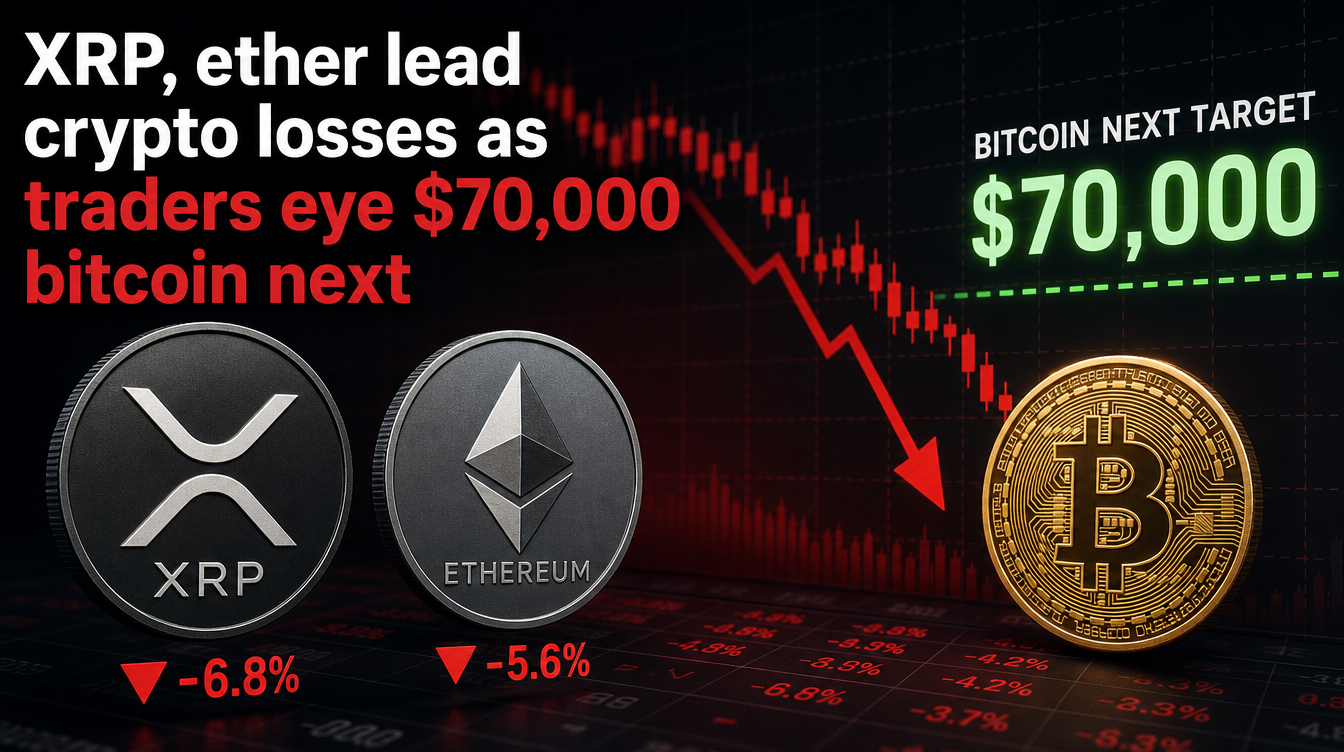
Bitcoin remained below the $65,000 mark on Tuesday after failing for a fourth consecutive day to establish a foothold above the key resistance level. The retreat came as a sharp rise in oil prices renewed concerns about inflation ahead of Wednesday’s U.S. inflation figures.
BTC fell more than 1% to around $64,000, although it remained slightly higher over the past seven days. The cryptocurrency briefly climbed above $65,300 during the 24-hour period before sellers pushed it lower during Asian trading hours.
Ether suffered the largest decline among the leading cryptocurrencies, falling more than 2% to approximately $1,878. ETH is nevertheless still modestly higher on the week. XRP dropped nearly 2% to about $1.01 and has lost almost 6% over seven days, making it the weakest major token in the group.
Solana slipped less than 1% below $76 and remains up roughly 3% this week. BNB fell to around $600 but continues to hold a 2% weekly gain.
Several other large tokens bucked the broader decline. HYPE, the native token of Hyperliquid, advanced nearly 2% to around $55, while Tron edged up to about $0.33. Dogecoin also recorded a marginal gain near $0.07.
According to Alex Kuptsikevich, chief market analyst at FxPro, Bitcoin has repeatedly approached $65,000 over the past four sessions but has yet to generate sufficient demand for a sustained breakout.
He said the market has also not shown significant profit-taking at that level. Instead, the limited selling could indicate traders are building short exposure above $65,000.
A successful move beyond the resistance could bring $70,000 into focus. The level is close to Bitcoin’s 200-day moving average and represents another important psychological threshold. Kuptsikevich said a breakout above it would move BTC beyond the range that shaped trading in March and April and could materially improve market sentiment.
For now, traders remain cautious. The crypto sentiment index stands at 30, placing market mood in the fear category. The gauge has remained in that zone since mid-July, with occasional approaches toward extreme fear.
Crude Oil and Bond Yields Add Pressure
Bitcoin is also contending with a less favorable macroeconomic environment. The U.S. 10-year Treasury yield rose six basis points Monday to 4.71%, while yields on Australian and New Zealand government bonds also moved higher. Treasury markets were closed during Asian hours due to a public holiday in Japan.
Brent crude held near $87.73 a barrel after jumping 5% in the previous session. The increase came after President Donald Trump issued fresh demands involving Iran, reducing expectations for a deal that could lead to the reopening of the Strait of Hormuz.
Gold also advanced for a third consecutive session, trading above $4,400 an ounce.
The oil rally has increased market sensitivity to Wednesday’s U.S. inflation report, which is scheduled for 8:30 a.m. ET. A rise in energy costs could add to inflationary pressure and reduce expectations for near-term rate cuts, potentially creating another headwind for cryptocurrencies.
Bitcoin investment flows had provided a counterweight in recent sessions. U.S. spot Bitcoin funds attracted roughly $865 million across five trading sessions through Aug. 7. Preliminary figures showed that trend reversing Monday, with about $91 million in net outflows.