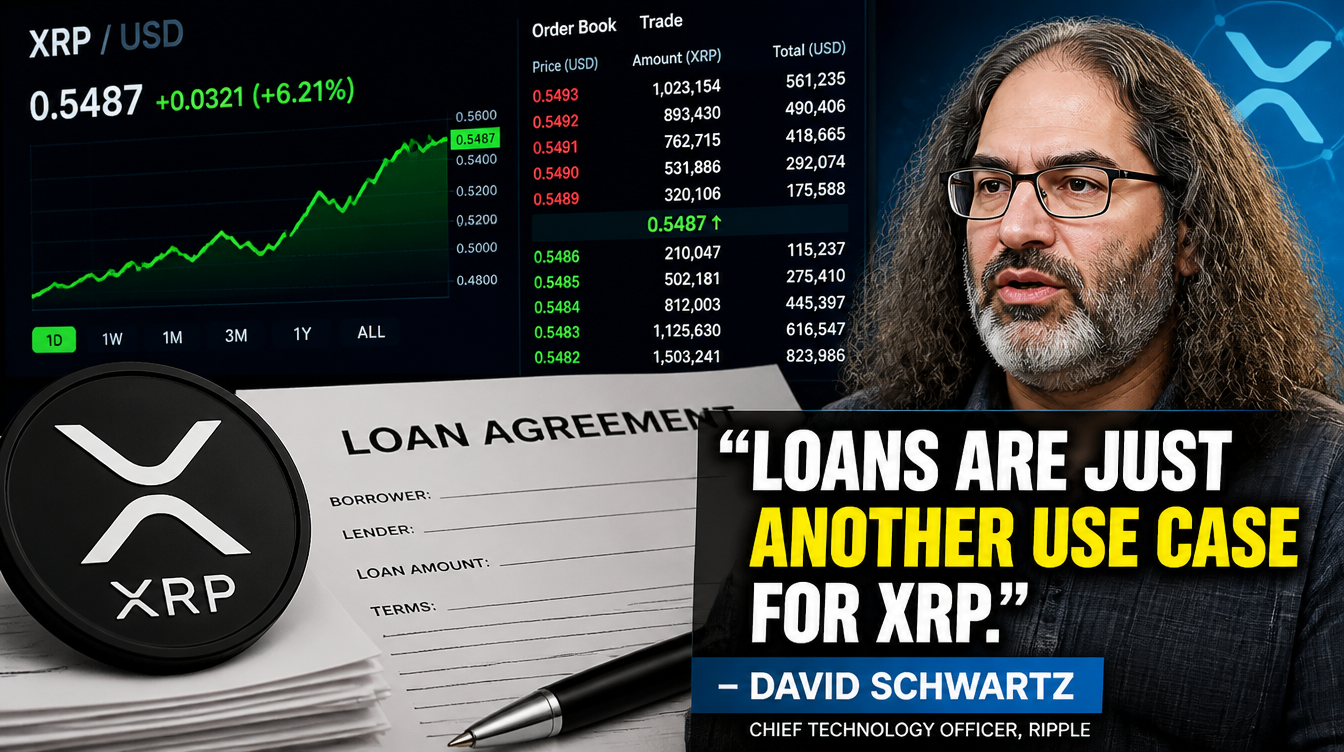
Ripple CTO Emeritus David Schwartz, in a June 5 video segment, outlined the evolving role of the XRP Ledger (XRPL). He described it as transitioning into a comprehensive settlement and issuance layer for tokenized assets such as stocks, money market funds, repos, and on-chain loans—moving beyond its original function as a fast payments network. This development is seen as a bullish signal for XRP.
The roadmap appears clearly defined, timelines for infrastructure rollout are compressed, and institutional partnerships are already in place. The key question now is which components are currently operational and which remain under development.
Discover: The Best Crypto to Diversify Your Portfolio
Current State of XRPL: Strong RWA Foundation, Major Products Still Pending
XRPL’s traction in real-world assets (RWAs) is backed by concrete data rather than projections. Tokenized RWAs on the network surged from $24.7 million to $567.9 million throughout 2025—a 2,200% increase—and reached approximately $2.325 billion by early 2026.
This growth places XRPL around 8th globally in tokenized RWAs, accounting for roughly 1.53% of the overall market.
The leading issuers—VERT Capital, RLUSD, and OpenEden—collectively represented 85.5% of the tokenized value as of mid-2025. Ripple’s regulated stablecoin RLUSD alone holds a market capitalization of $1.3 billion, ranking as the third-largest regulated stablecoin in the United States.
While this reflects the current live infrastructure, the implications for XRPL’s ambitions in tokenized equities and credit markets remain uncertain.
From a protocol perspective, two key innovations underpin Schwartz’s vision. The Multi-Purpose Token (MPT) standard enables the on-chain representation of complex financial instruments like bonds and funds, incorporating features such as maturity dates and transfer restrictions without the need for custom smart contracts.
Additionally, the native lending protocol—introduced under XLS-66 and included in XRPL Version 3.0.0—facilitates fixed-term institutional loans through isolated vaults and automated repayment mechanisms. A permissioned decentralized exchange (DEX), accessible only to KYC-verified participants, is already live with its initial offering.
These developments are not theoretical—they are actively being deployed. However, full activation of the lending protocol still depends on achieving an 80% supermajority validator vote under XLS-66.
What Schwartz Said on June 5 and What It Signals
In the “XRP in a Minute” segment, Schwartz carefully structured his narrative. He began by acknowledging Bitcoin’s role in proving that public blockchains can enable value storage and transfer. He then positioned XRPL as the next evolutionary step—capable of supporting both native digital assets and issued assets like stablecoins or tokenized instruments.
He explicitly highlighted near-term focus areas, including tokenized securities, money market funds, and tokenized stocks. On the credit side, he referenced tokenized repos and loans. The sequence is significant.
Securities and funds come first, as they align with strong institutional demand and benefit from existing compliance frameworks on XRPL. Repos and loans follow, contingent on the full deployment of the XLS-66 lending protocol.
While tokenized stocks were mentioned, there is no confirmation that such products are currently live on the ledger. However, Archax, a UK-regulated digital securities exchange, has committed to a $1 billion pipeline involving equities and fund units.
The technical infrastructure—including MPT, the permissioned DEX, and credential-based order books—is capable of supporting tokenized equities, even though live offerings have yet to be announced.
Schwartz’s broader institutional thesis is clear: enterprises will drive adoption by building compliant, feature-rich financial products that attract mainstream users. This suggests that the next phase of tokenization growth will be led by enterprise-grade solutions rather than purely permissionless DeFi or retail-driven speculation.
Discover: The Best Token Presales