Crypto markets edged higher on Wednesday, but declining futures open interest and uneven altcoin performance point to traders cutting risk rather than aggressively buying into the rebound.
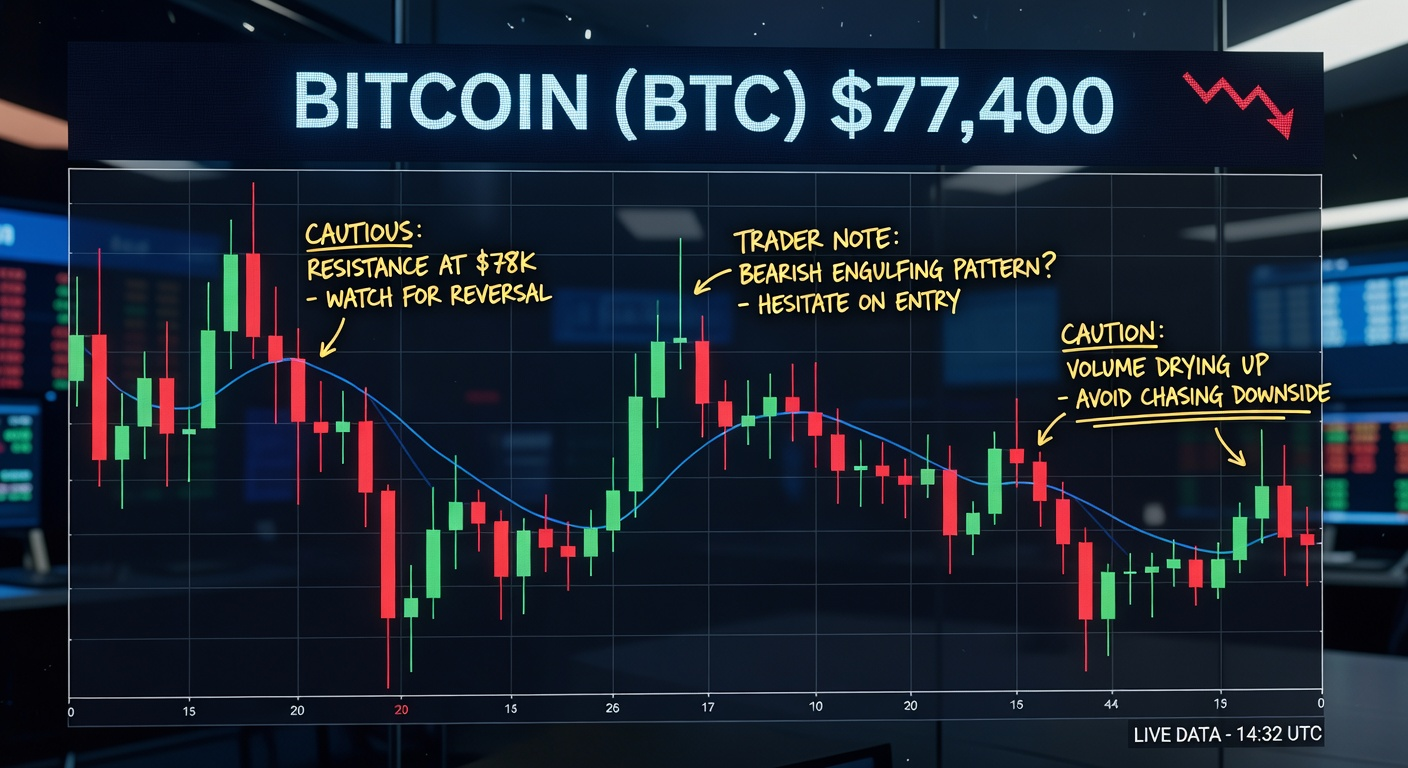
The market remained cautious after Bitcoin (BTC) failed to break above $83,000 last week, leaving prices stuck in consolidation. BTC was recently trading near $77,400, up 0.7% since midnight UTC, but still recovering from a 5% weekly decline.
Ether (ETH) outperformed, rising 1% to $2,130, while altcoins showed a mixed picture. CHZ, TON, and ATOM fell between 1% and 3%, whereas DASH, STRK, and PYTH gained around 5%.
In traditional markets, U.S. equities slipped on Tuesday as bond market volatility weighed on sentiment. Investors are now focused on Nvidia (NVDA) earnings, due after Wednesday’s market close.
Crypto derivatives activity softened further. Total 24-hour futures volume dropped 29% to $142.76 billion, while open interest stayed roughly flat at around $127 billion. Liquidations also eased for a second straight day, falling 47% to $153 million.
Bitcoin futures positioning showed subtle de-risking. Combined USD and USDT-denominated BTC open interest slipped to 257,000 BTC across major exchanges, while global BTC futures open interest edged down to 744,000 BTC, a decline of roughly 1,000 BTC. The move suggests traders are scaling back leverage on strength rather than adding exposure.
XRP told a different story. Open interest rose more than 5% to 2.15 billion XRP, the highest level since October 11, while spot prices also moved higher—often a sign of strengthening trend momentum. However, XRP’s 24-hour cumulative volume delta was among the most negative in large caps, indicating aggressive selling pressure and suggesting some traders may be fading the move.
Zcash (ZEC) remained a standout, with open interest rising for a third consecutive session to 2.27 million tokens. The token rebounded from $486.60 to $586, supported by a technical “golden cross” where the 50-day moving average moved above the 200-day moving average, often viewed as a longer-term bullish signal.
Ether derivatives also showed increased activity, with open interest climbing back above 15 million ETH and approaching the May 16 record of 15.52 million. Despite positive funding rates, negative volume delta readings suggest a mixed and indecisive market structure.
Hyperliquid’s HYPE token showed one of the clearest divergences, with funding rates at an annualized -36.85% even as the token traded at $48.85, its highest level since late October. The setup suggests traders may be shorting futures as a hedge rather than expressing outright bearish conviction.
Volatility remains subdued across major cryptocurrencies, with Bitcoin and Ether implied volatility near yearly lows despite rising uncertainty in broader macro markets. Deribit analysts noted that Bitcoin volatility appears relatively cheap, with strategies like long straddles positioned for a potential breakout in either direction.
Options activity reflected this cautious stance, including Bitcoin put ratio spreads and Ether call spreads among recent block trades.
Among altcoins, XDC led gains with a 12% rise since midnight, boosted by a 44% jump in trading volume tied to renewed interest in real-world asset (RWA) narratives. DASH also outperformed, gaining 10% over 24 hours and extending its uptrend from early April with a pattern of higher highs and higher lows.
Finally, overall market sentiment cooled, with CoinMarketCap’s “Altcoin Season” index dropping to 34/100 from last week’s high of 50/100, signaling a shift back toward Bitcoin dominance.