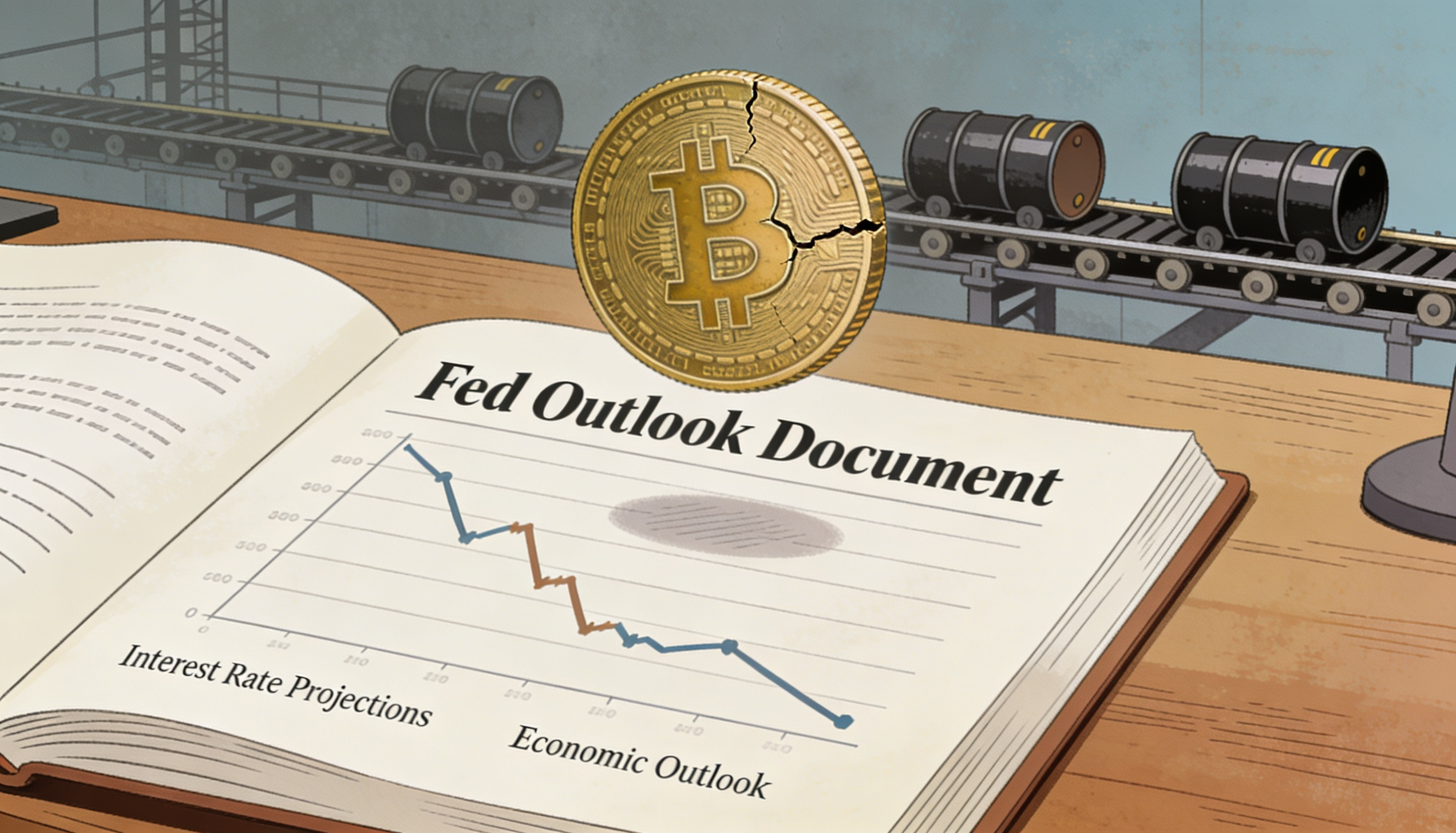
Bitcoin is facing near-term pressure from macro uncertainty, with oil-driven inflation, Federal Reserve policy expectations, and questions around AI demand shaping the outlook, according to market maker Enflux.
The cryptocurrency was down roughly 3% during Asian trading hours, hovering near $77,000 as investors adopt a cautious stance ahead of a packed week of economic events. Despite the pullback, the move appears driven more by positioning and uncertainty than a decisive shift in sentiment.
In a note, Singapore-based Enflux said traders are hesitant to push prices higher ahead of Wednesday’s Fed rate decision and a series of key data releases, including GDP, PCE inflation, and the Employment Cost Index. These indicators are expected to play a critical role in shaping expectations around potential rate cuts later this year.
For now, elevated oil prices remain the primary constraint. Brent crude holding above $100 continues to complicate the inflation outlook, raising the threshold for any dovish signal from Fed Chair Jerome Powell.
Enflux noted that markets are balancing two competing assumptions: geopolitical tensions may eventually ease, but not quickly enough to influence near-term monetary policy. This has effectively ruled out a June rate cut—reflected in betting markets—and created a more uncertain backdrop for risk assets like bitcoin.
Against this backdrop, bitcoin has struggled to reclaim key technical levels. The asset is trading about 4% below its short-term holder cost basis near $80,700, often seen as a gauge of marginal buyer conviction. A sustained move above that level would likely require clearer signals that oil-driven inflation is temporary.
Absent such clarity, Enflux expects bitcoin to remain range-bound into upcoming data releases, with any sharper price movement more likely to follow macroeconomic prints rather than the Fed decision itself.
Looking beyond the immediate horizon, developments in the AI sector could also influence market dynamics. A recent report highlighting weaker-than-expected revenue at OpenAI has raised concerns about the pace of AI demand growth.
This matters for bitcoin because publicly listed mining firms have increasingly taken on debt and sold portions of their bitcoin holdings to fund a pivot toward AI data center infrastructure, which is widely viewed as more profitable than traditional mining.
If AI demand slows, it could eventually reduce the need for miners to sell bitcoin to finance expansion, potentially easing a key source of supply. However, the timing remains uncertain.
In the near term, weaker sentiment in technology and semiconductor stocks could weigh on crypto markets, while any reduction in miner-driven selling would likely materialize more gradually.
Overall, Enflux argues that bitcoin remains caught between competing macro forces. The uncertainty surrounding AI demand adds another layer of complexity without immediately resolving the dominant drivers of price—leaving the asset trading in a tight range as markets await clearer direction.