The odds of a Federal Reserve rate hike at its September policy meeting fell below 50% after the latest jobs data pointed to a sharper-than-expected slowdown in the U.S. labor market.
The employment market weakened for a second straight month in July, potentially allowing the Fed to maintain current interest rates even as inflation remains above its target.
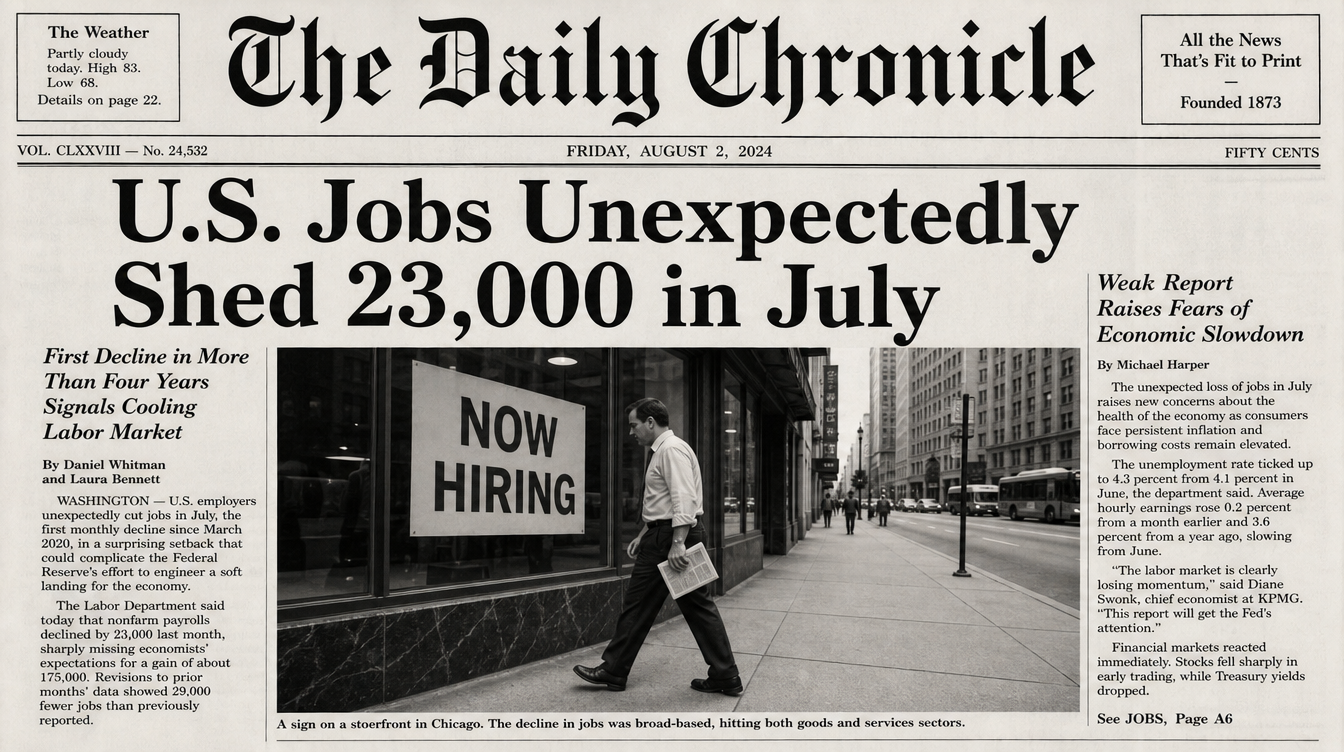
According to the government’s Nonfarm Payrolls report released Friday, U.S. employers cut 23,000 jobs last month. The figure came well below economists’ forecast of an 80,000-job increase and followed June’s revised payroll gain of 20,000, which was lowered from the initial estimate of 57,000.
May’s employment growth was also adjusted downward, with job gains revised to 63,000 from the previously reported 129,000.
The latest decline marked the first monthly job loss since February, when payrolls dropped by 156,000.
The unemployment rate unexpectedly improved to 4.1%, beating forecasts of 4.2% and matching the prior month’s level.
Markets reacted quickly after the report, with U.S. equity futures moving higher and bond yields declining. Precious metals extended their gains, with gold rising 3% and silver advancing close to 6%. Bitcoin showed little reaction, trading modestly higher around $65,000.
The report also showed softer wage growth than expected. Average hourly earnings increased just 0.1% in July, below projections for a 0.3% gain and down from June’s 0.3% increase. On an annual basis, wages climbed 3.2%, falling short of the 3.5% forecast and slowing from the previous month’s 3.4% growth.
Ahead of the release, traders were split on whether the Fed would increase rates in September. CME FedWatch data showed markets had assigned a 55% chance of a rate hike before the report. After the weaker employment figures emerged, that probability dropped to 46%.