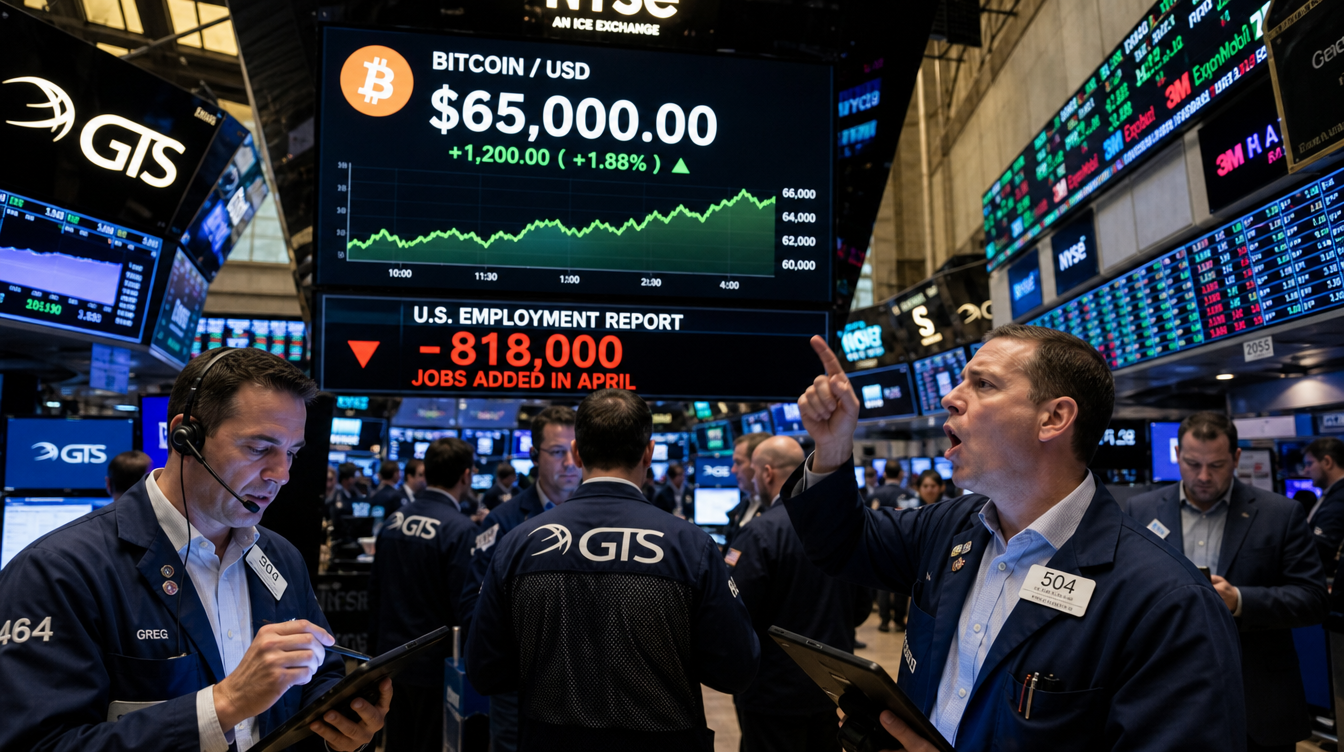
Economist urges caution over weak employment data
RSM chief economist Joe Brusuelas said investors and the Federal Reserve should not place too much weight on the latest weak jobs report, arguing that seasonal adjustment problems at the Bureau of Labor Statistics may have distorted the headline figure.
He highlighted a steep decline in leisure and hospitality jobs, suggesting the drop may have been influenced by the conclusion of World Cup-related activity rather than a broader weakening in employment.
Brusuelas said the report is unlikely to change the Federal Reserve’s near-term approach and that policymakers and markets should focus more on upcoming inflation figures for a clearer view of the economy.
U.S. payrolls decline unexpectedly in July
The U.S. labor market showed further signs of slowing in July, with payrolls falling for the second straight month and potentially giving the Federal Reserve more room to maintain current interest rates despite elevated inflation.
The Labor Department’s Nonfarm Payrolls report showed the economy lost 23,000 jobs in July, missing expectations for an 80,000-job increase. The result was also weaker than June’s revised gain of 20,000 jobs, which was initially reported at 57,000.
May’s employment figure was revised down as well, dropping to 63,000 from the earlier estimate of 129,000.
The last time U.S. payrolls declined was in February, when the economy lost 156,000 jobs.
The unemployment rate unexpectedly fell to 4.1%, below forecasts of 4.2% and June’s level of 4.2%.
Financial markets reacted immediately, with U.S. stock futures moving higher and bond yields declining. Precious metals also rallied, with gold rising about 3% and silver gaining nearly 6%. Bitcoin remained relatively stable, trading slightly above $65,000.
Wage growth also came in below projections. Average hourly earnings increased only 0.1% in July, compared with expectations for a 0.3% rise and June’s 0.3% gain. Annual wage growth slowed to 3.2%, below the expected 3.5% and June’s 3.4%.
Ahead of the report, markets were uncertain about whether the Federal Reserve would raise rates in September. CME FedWatch data showed traders had assigned a 55% probability to a rate increase before the release, but that figure dropped to 46% afterward.
Bank of America warns market optimism is approaching extreme levels
Bank of America’s bull-and-bear sentiment indicator has reached its highest level since 2021, when pandemic stimulus drove widespread investor enthusiasm.
The bank’s team, led by Michael Hartnett, recommended that investors reduce exposure to risk assets and consider defensive positions, longer-duration investments, and the U.S. dollar as the gauge climbed to 9.7 from 9.4, nearing its maximum reading of 10.
Unlike 2021, however, cryptocurrencies have not benefited from the same wave of investor confidence. While traditional markets continue reaching new highs, Bitcoin and other digital assets remain below their previous peaks.
Bitcoin miners move $37 million worth of BTC to NYDIG
Bitcoin mining firms transferred more than $37 million in BTC to NYDIG, a move that could potentially signal plans to sell.
However, NYDIG also provides custody and financing services, meaning the transfers may simply represent storage or other operational arrangements rather than immediate liquidation.
Blockchain tracking data from Lookonchain showed that MARA Holdings sent 200 BTC worth around $12.86 million, while Riot Platforms transferred 381 BTC valued at approximately $24.51 million to NYDIG.
MetaMask introduces AI-based crypto trading wallet
MetaMask has launched its AI-powered Agent Wallet, allowing users to assign artificial intelligence agents to perform crypto-related tasks such as monitoring markets, executing swaps, and managing on-chain transactions.
The wallet allows integration with AI tools including Claude Code, Codex, and Cursor, while users can define spending limits and restrict the protocols their agents can access.
It offers two operating modes: Guard Mode for more conservative automation and Beast Mode for fewer restrictions.
The wallet supports HyperLiquid and several Ethereum-compatible networks. MetaMask said the product includes transaction simulations, security checks, and MEV protection measures before trades are completed.
Gold and silver continue rally as investors shift from AI stocks
Precious metals extended their gains on Friday, with gold rising another 1% toward $4,300 per ounce and silver climbing above $64 after a gain of more than 4% over the previous day.
The rally has been supported by investors rotating away from AI-related equities and seeking alternative assets amid concerns over the sustainability of the AI-driven market boom.
Fidelity strategist warns rising yields may pressure markets
Jurrien Timmer, Fidelity’s director of global macro, warned that rising 10-year Treasury yields above 4.5% could create challenges for financial markets.
Timmer said the benchmark yield had entered a risky zone at 4.73%, noting that previous market cycles suggest elevated long-term yields can weigh heavily on asset prices.
He pointed to several possible causes, including heavy borrowing demand from AI companies, doubts over whether the Federal Reserve will maintain its hawkish stance, and increased uncertainty caused by reduced policy transparency.
Higher yields often create pressure on risk assets, including technology shares and cryptocurrencies.
Bitcoin trades near $64,350 ahead of jobs report
Bitcoin hovered around $64,350 on Friday, showing little weekly movement as investors awaited the latest employment data. Ether remained near $1,903, while other major cryptocurrencies traded within narrow ranges.
Market conditions became less favorable after oil prices climbed following renewed geopolitical tensions involving Iran and shipping routes through the Strait of Hormuz.
Higher crude prices could revive inflation concerns, potentially keeping the Federal Reserve more cautious on rate cuts. Treasury yields rose, while the U.S. dollar recorded its strongest performance in two weeks.
For Bitcoin, the key focus remains on macroeconomic conditions. A weaker jobs report could improve expectations for monetary easing and support risk assets, while stronger data and rising oil prices could reinforce a tighter policy outlook.