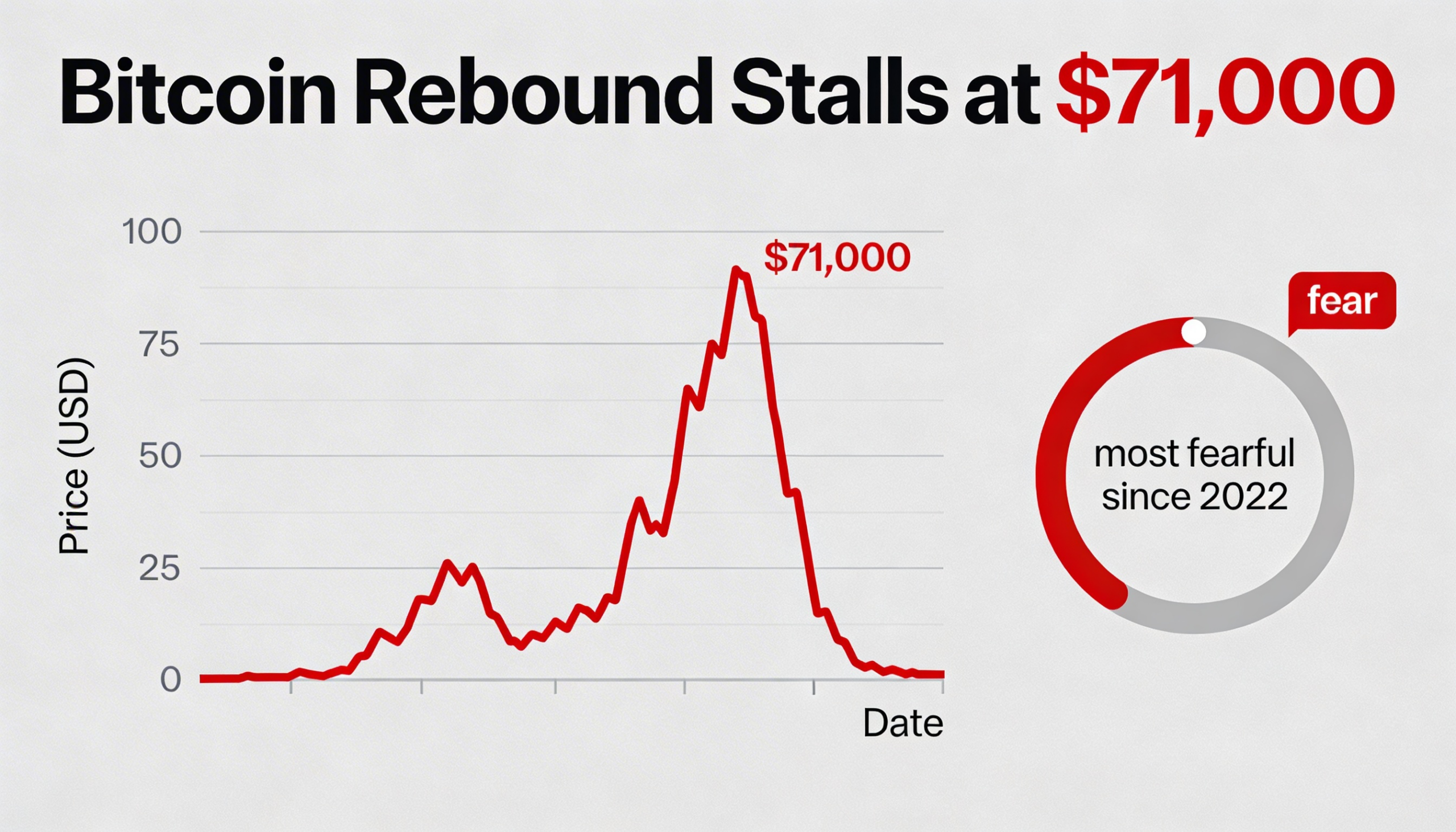
The United States could face increased competition from overseas crypto markets after the Senate failed to advance the Clarity Act, though new rules from the SEC and CFTC may still provide parts of the industry with a regulatory path forward.
The legislation’s failure Tuesday leaves the U.S. without a comprehensive federal framework for digital assets and continues to blur the respective roles of the Securities and Exchange Commission (SEC) and Commodity Futures Trading Commission (CFTC).
The uncertainty was reflected immediately in U.S.-focused crypto markets. Shares of publicly traded companies such as Coinbase Global and stablecoin issuer Circle Internet dropped 10% after the Senate vote.
The consequences extend beyond stock prices. U.S. retail investors continue to operate without a unified regulatory structure, while institutional investors face additional uncertainty when considering large-scale commitments to digital assets. At the same time, the U.S. risks losing some of its position as jurisdictions compete to attract crypto businesses, investment and talent.
“The practical reality is that capital and talent move toward environments where the rules are clearest,” said Lin Han, CEO and founder of crypto exchange Gate.
Han said exchanges and other digital-asset providers with licenses in established foreign markets could benefit in the short term. Gate is primarily focused on Asia and ranks fifth on CoinGecko.
However, Han cautioned that the regulatory vacuum in the U.S. could have broader consequences for the global industry, regardless of where individual crypto companies are based.
Europe and Asia Continue Regulatory Push
The Senate setback leaves the U.S. and U.K. among major financial centers still waiting for comprehensive crypto regulations. Britain’s full framework is not expected to become effective until next year.
The European Union has already implemented its Markets in Crypto-Assets (MiCA) framework, which was adopted in 2023 and became fully effective in July. Meanwhile, several Asian markets continue to build and expand their digital-asset rules.
Stefan Muehlbauer, head of U.S. government affairs at blockchain security firm CertiK, said the consequences could extend beyond crypto businesses.
“The true losers are the American public and the domestic tech ecosystem,” he said.
Muehlbauer argued that overseas crypto hubs, gray-market operators and financial centers in Asia and Europe could capture additional market share as businesses seek jurisdictions with more established rules.
The SEC and CFTC can still issue regulations using their existing authority. The SEC showed that it can move independently Thursday when it introduced an “innovation exemption” for tokenized securities trading, potentially giving some U.S. businesses a clearer route to market.
Still, Muehlbauer said agency action does not offer the same certainty as legislation. Companies planning investments, new products and long-term compliance strategies are likely to place greater value on rules established by Congress.
Industry Sees No Automatic Shift to Asia
Gracy Chen, CEO of crypto exchange Bitget, pushed back against the idea that the Senate vote would immediately send significant trading volumes from the U.S. to Asia.
“I wouldn’t look at it as volume suddenly moving from the U.S. to Asia because of one vote,” she said. “Crypto is inherently a global market, and traders will continue to go where they can find the products, liquidity and access they need.”
Chen said the vote nevertheless extends uncertainty surrounding U.S. market structure and the regulatory treatment of digital assets.
Bitget still plans to enter the U.S. using the required licenses and corporate structure, she said, adding that its plans do not depend on passage of the Clarity Act.
Matt Hougan, chief investment officer at Bitwise Asset Management, described the outcome as a setback but not a fundamental break in the industry’s direction.
“It would have been better if it had passed,” Hougan said. “With it failing, I think the road ahead is bumpier. But the trend is still good, and I don’t think it’s changed too much from where it was Monday, before the vote.”
Hougan noted that President Donald Trump’s pro-crypto administration still has two and a half years remaining, leaving room for additional regulatory developments.
He also said the vote should not discourage investors from considering smaller digital assets with strong token economics and connections to real-world assets.
Agency Rulemaking May Drive Near-Term Changes
Tom Farley, CEO of CoinDesk owner Bullish, also said the failed legislation does not prevent the industry from making progress.
“Durable legislation would give the digital asset industry greater certainty. But even with legislation, the real work of implementation happens at the agencies, and agencies can move faster,” Farley said in a post on X.
According to Farley, SEC and CFTC rulemaking could have greater near-term importance for tokenized securities, particularly regarding issuers, transfer agents and issuer-sponsored tokens.
Nilmini Rubin, chief policy officer at Hedera, said the legislative process is not necessarily finished.
“We’ve seen policymakers put real time and effort into studying the underlying technology, which is a positive step in the right direction,” she said. “I think most of the industry is still as ambitious as ever that we’ll get to where we need to be.”
Rubin nevertheless said the U.S. remains exposed to competitive risks while regulatory uncertainty persists.
“The largest loser is U.S. competitiveness because uncertainty pushes innovation and adoption in the U.S. behind other countries,” she said. “The longer the market lacks clear rules, the more difficult it is to ensure the United States remains at the center of this system, rather than on the margins of it.”
Rubin expects stablecoins, tokenization and cross-border payments to continue expanding regardless of the Senate vote. However, she said the lack of a federal statutory framework could make consumer protection more difficult.
U.S. Crypto Regulation Still Has a Path Forward
Despite the legislative setback, executives across the industry continue to expect the SEC and CFTC to develop rules under their existing authority.
Those measures could provide more certainty in specific areas while lawmakers continue working toward broader legislation. Whether agency rules can ultimately deliver the same long-term stability as federal legislation remains uncertain.
Richard B. Levin, chair of FinTech and regulation at Taft Stettinius & Hollister LLP, summed up the broader challenge during a panel at the 2026 European Blockchain Convention in Barcelona:
“You can count on Americans to do it absolutely wrong until they finally get it right.”