A sharp selloff in a SpaceX-linked crypto token triggered widespread liquidations among retail traders after thin liquidity amplified a rapid market move.
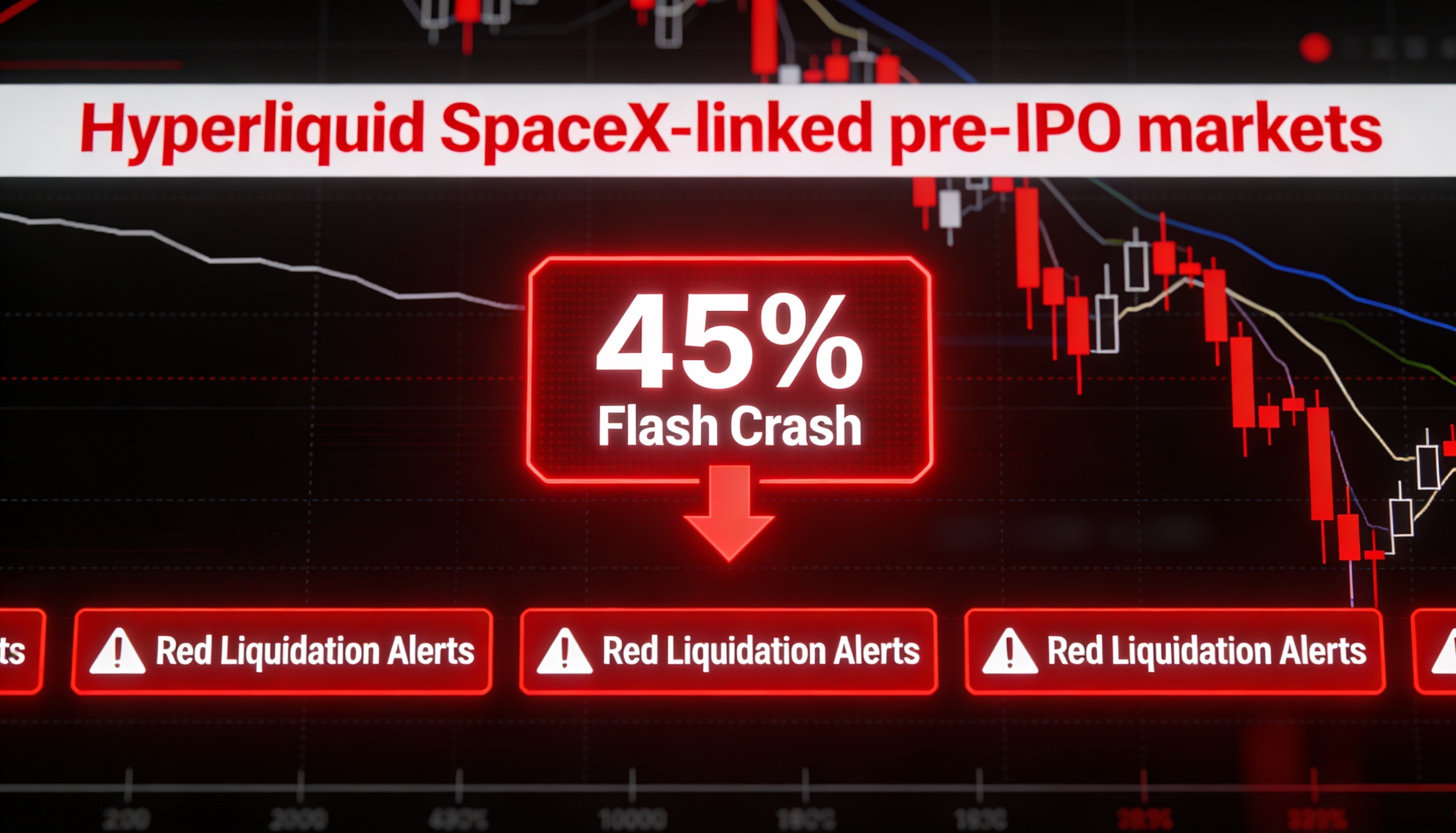
Hyperliquid’s SPACEX-USDH perpetual contract experienced a violent flash crash on Thursday, dropping from an opening level of $2,277 to a low of $1,254 in roughly 30 minutes — a near 45% collapse — before partially recovering to around $2,169. According to Hyperliquid data, the move liquidated 405 users across 1,393 positions, erasing about $1.51 million in notional value.
The scale of the move was amplified by unusually light trading conditions. Over the prior 24 hours, the contract had recorded just $4.87 million in total volume against open interest of under $2.9 million, leaving the market with limited depth to absorb aggressive selling. When the liquidation cascade hit, a large portion of the available liquidity was effectively swept in a single move.
Data also indicates the retail-heavy nature of the positioning. The median liquidated account held just $31 in margin, suggesting traders were using relatively small accounts with leveraged exposure, leaving little buffer against sharp price swings.
The SPACEX-USDH contract is a synthetic perpetual market designed to track expectations for SpaceX’s private valuation. Because SpaceX is not publicly traded, investors cannot access its equity ahead of a potential future IPO. The contract instead allows traders to speculate on the company’s implied valuation through a crypto-native derivatives structure.
Unlike traditional perpetual futures tied to highly liquid assets such as Bitcoin or Ethereum, the SpaceX contract lacks a deep underlying spot market. Private secondary market pricing for SpaceX shares exists but is restricted to accredited investors, leaving the crypto contract without a robust public benchmark.
At settlement, the contract’s mark price of $2,132 still traded more than $220 above its oracle reference price of $1,908, indicating that even after the sharp liquidation event, the market continued to price in a premium relative to the external valuation feed.