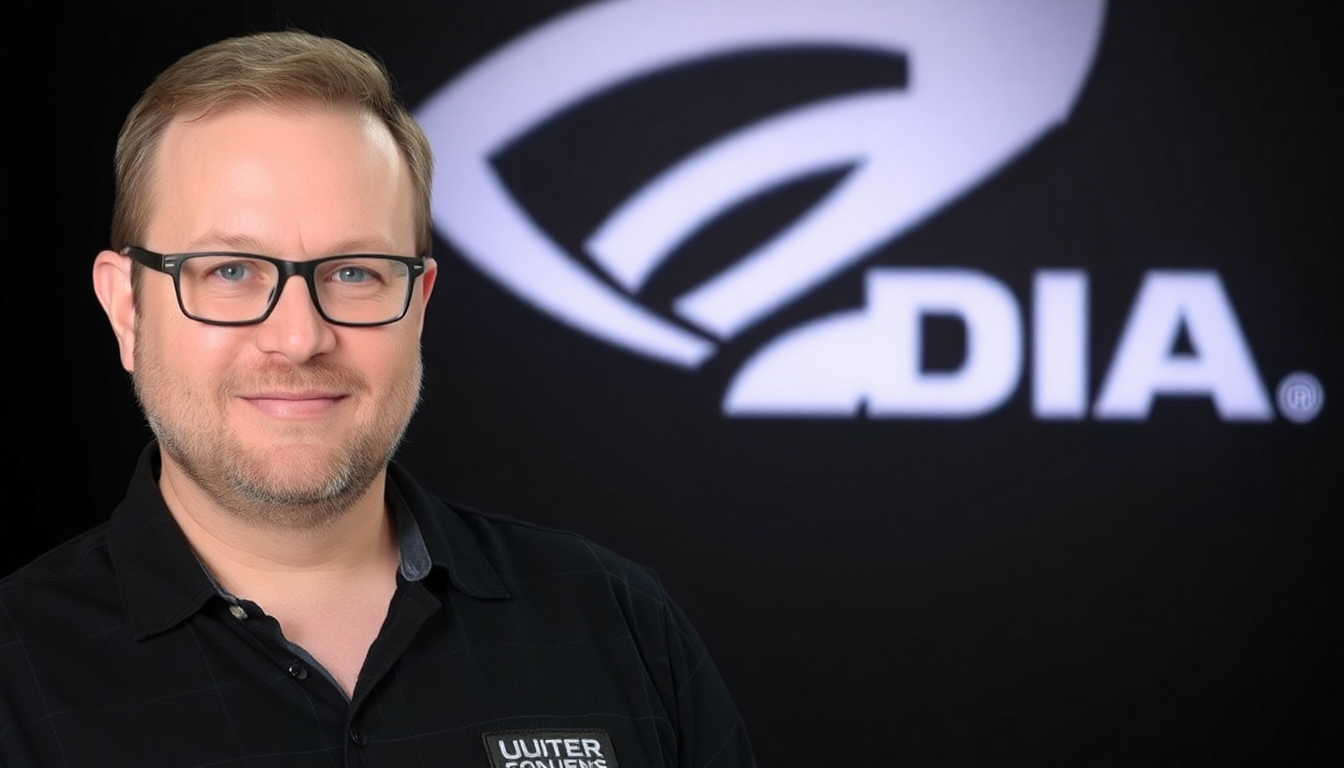
Nvidia could be preparing for a major executive transition, with Rene Haas reportedly emerging as a potential successor to Jensen Huang. Haas, who helped establish Arm as a major player in the semiconductor and AI industries, is now being considered for one of the most influential positions in the technology sector.
According to Bloomberg, Nvidia’s executive search firm has approached Haas while evaluating candidates for its next chief executive. Haas previously worked at Nvidia for seven years before moving to Arm in 2013. He was appointed Arm’s CEO in 2022 and has since overseen its growing involvement in artificial intelligence and data center infrastructure.
Bringing Haas into Nvidia’s leadership could give the company an executive familiar with both businesses and their long-term growth strategies. However, the potential transition also raises questions about the future of the AI industry and its impact on cryptocurrency markets.
Could Haas take Nvidia’s AI ambitions to another level, and what would that mean for Bitcoin and other digital assets?
Could Rene Haas Replicate Arm’s AI Success at Nvidia?
Haas is already familiar with Nvidia’s operations. Between 2006 and 2013, he managed the company’s computing products business, gaining valuable experience before Nvidia transformed into a global leader in AI processors.
His performance at Arm has strengthened his reputation as a semiconductor industry executive. The company recorded $4.92 billion in revenue during fiscal 2026, compared with $4.01 billion in the previous year. Profit before tax also increased from $756 million to $960 million.
Arm has gradually moved beyond its traditional chip-design licensing model to pursue a larger role in AI infrastructure. In March 2026, it introduced its own AGI CPU for AI data centers, highlighting its ambition to participate more directly in the expanding artificial intelligence market.
The company’s technology already powers more than 99% of smartphones worldwide. Arm-based designs are also widely deployed across cloud computing infrastructure operated by major technology companies, including Nvidia.
Haas has helped position Arm to benefit from growing demand for AI computing. If he takes over at Nvidia, his priorities could include expanding the company’s presence beyond its existing semiconductor business.
Nvidia’s financial performance provides a powerful starting point. In its latest quarterly results, the company generated $115.8 billion in revenue, with its data center division contributing $107.6 billion. Total revenue increased 103% year over year, demonstrating the continued strength of demand for its AI infrastructure.
The company’s next-generation Vera Rubin platform has also moved into production, with initial shipments underway. A new CEO would inherit this substantial growth opportunity while facing the challenge of maintaining Nvidia’s leadership as competition across the AI industry intensifies.
If Haas adopts a strategy similar to his approach at Arm, Nvidia could accelerate its expansion into integrated computing systems, data center infrastructure, and advanced AI applications.
That strategy could generate another wave of technology investment, creating opportunities across semiconductor manufacturing, cloud computing, and AI infrastructure. The resulting expansion could also influence the cryptocurrency sector, particularly projects connected to AI computing and decentralized infrastructure.