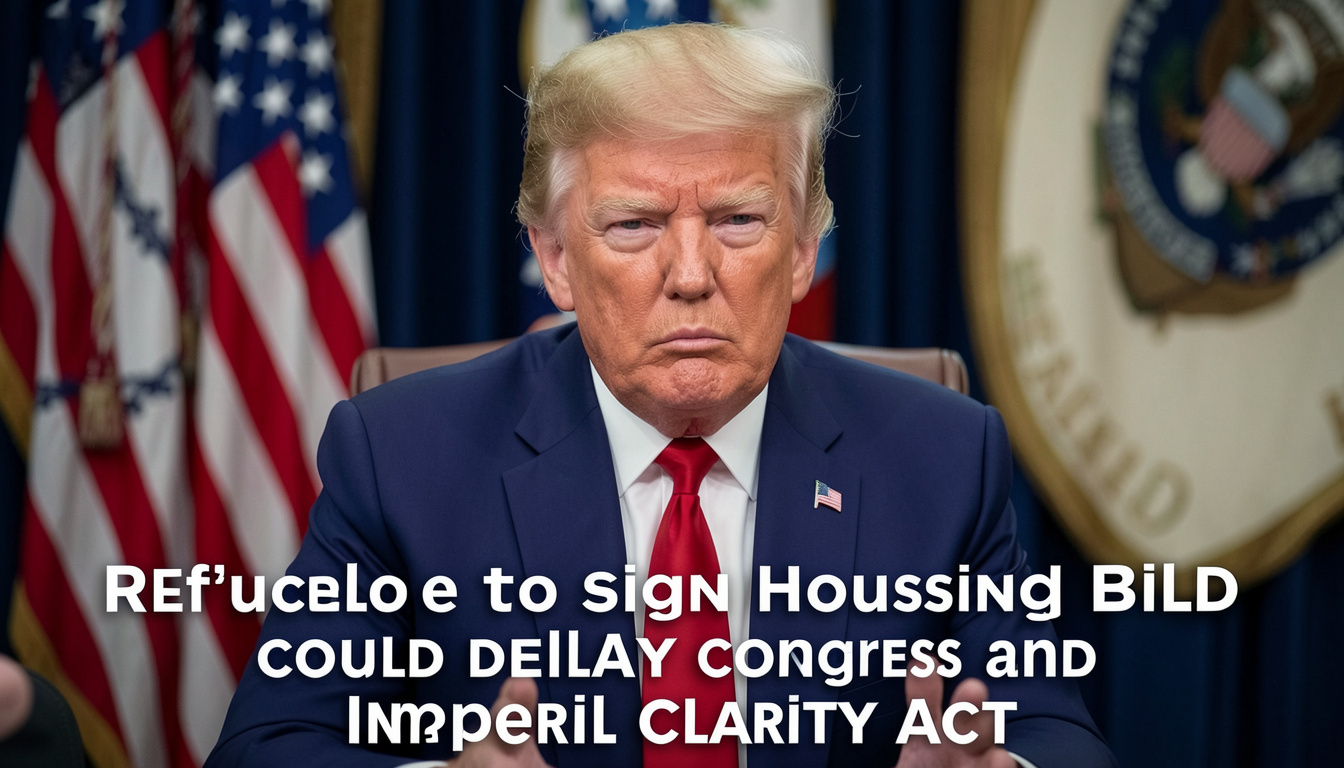
As Congress prepared to hold a ceremonial signing for a bipartisan housing bill that includes a ban on central bank digital currencies (CBDCs), President Donald Trump abruptly called off the event.
Trump has stated he will not sign the legislation—which is part of the housing affordability package and includes a four-year CBDC prohibition—unless lawmakers first pass unrelated voting legislation requiring proof of citizenship.
The Wednesday signing ceremony was canceled after Trump posted on Truth Social that it would be suspended until Congress passes the “SAVE AMERICA ACT,” which he described as a national emergency priority. The decision raises the risk of broader legislative delays, including efforts tied to the crypto industry’s market structure bill.
The legislation Trump is prioritizing includes disputed election measures such as voter ID and citizenship verification requirements. However, Republican leaders have struggled to secure enough Senate support, with House Speaker Mike Johnson noting the bill may need to be attached to other legislative vehicles to move forward.
Delaying or derailing the housing bill could carry significant political consequences, as it previously had bipartisan backing and included a CBDC ban extending through 2030—an outcome strongly supported by anti-CBDC advocates in the crypto sector. While a U.S. digital currency is not expected in the near term, critics argue it could pose risks to privacy and financial independence.
Trump has previously taken a firm stance against a central bank digital currency, signing an executive order opposing its development on grounds of financial stability, privacy, and national sovereignty.
Risk to crypto legislation timeline
For the crypto industry, the greater concern is that the standoff could slow momentum on the Digital Asset Market Clarity Act, a key market structure bill targeted for this congressional session. With only about five weeks remaining before the summer recess, the legislative window is narrowing quickly.
A shift in congressional focus toward Trump’s election-related priorities could further crowd out crypto policy discussions. Republican lawmakers were already attempting to revive the voter-ID proposal this week.
Analysts at TD Cowen said there is effectively “no path” for the SAVE Act to become law under current political conditions, citing filibuster constraints and limited Senate support even if procedural barriers were addressed.
Before canceling the housing bill signing, Trump had downplayed its importance, calling it secondary to issues such as interest rates, and criticized Senator Elizabeth Warren’s involvement.
Under the Constitution, the president has 10 days to sign or veto legislation once it reaches his desk. Even if vetoed, Congress could override it with sufficient support, though that would require alignment among Republican lawmakers with the president’s position.