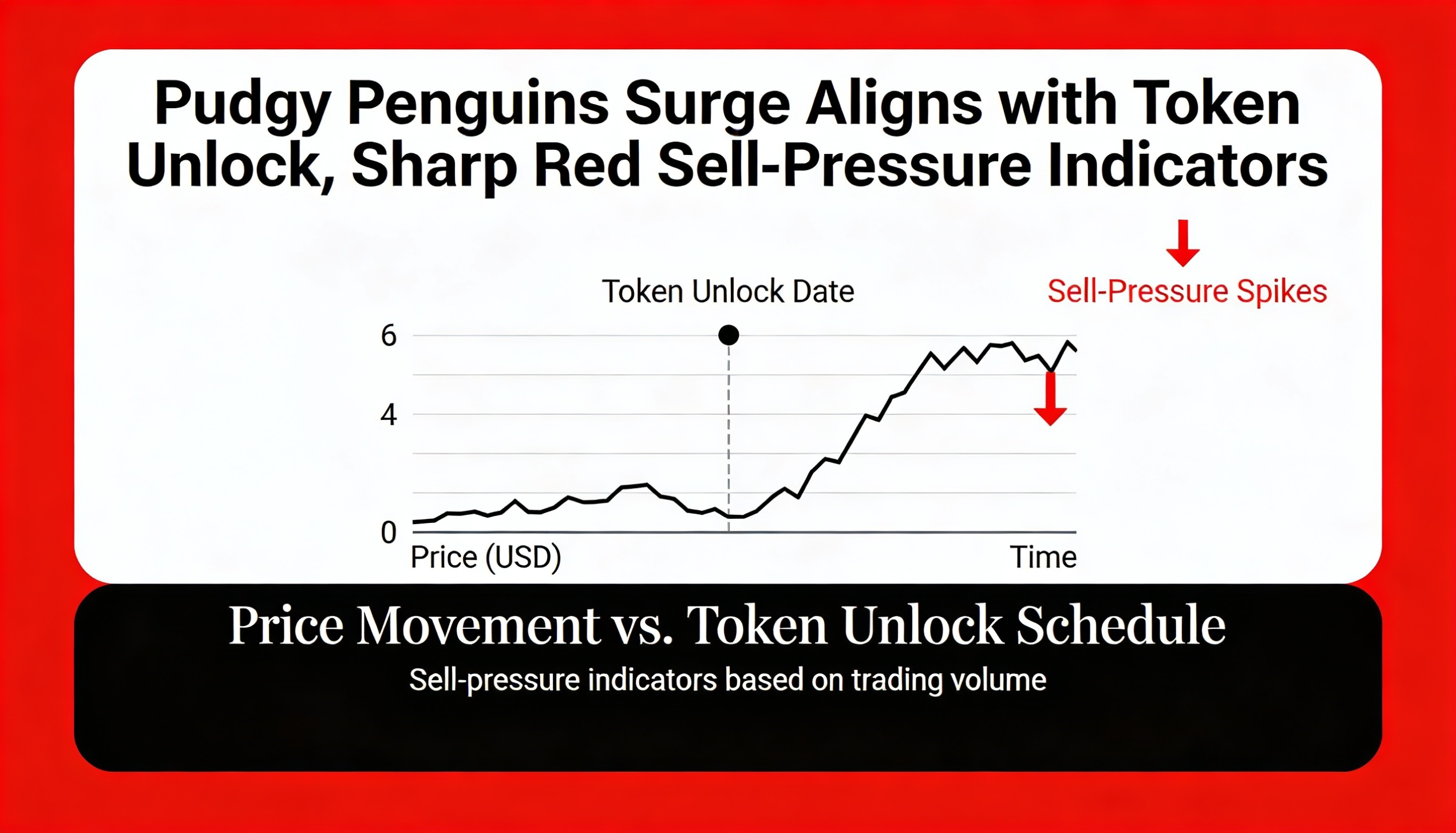
Pudgy Penguins’ recent rally may have been fueled by positive ecosystem developments, but on-chain signals suggest the move also created a timely exit window for large holders following a mid-April token unlock.
According to DNTV Research founder Bradley Park, the surge provided the kind of liquidity — a sufficient pool of buyers — that major token holders typically need to offload positions without disrupting price momentum. While headlines around the Pengu Card, PenguBot, and other updates drew attention, Park argues these narratives played a secondary role.
“The key event was the large token unlock roughly 10 days ago,” Park said, downplaying the impact of ecosystem announcements as primary drivers of the rally.
On April 17, approximately 703 million PENGU tokens — about 0.79% of the total 88 billion supply — were released in a single tranche. Data shows that shortly after, a primary wallet received 182.8 million tokens and redistributed them across 19 separate addresses within an hour.
Park describes this as a “vesting-claim-and-disperse” pattern, often associated with preparation for gradual selling rather than long-term holding. By splitting tokens into smaller allocations, holders can reduce market impact when executing sales.
Market dynamics appeared to support this strategy. Open interest in PENGU futures climbed from roughly $36 million to $59 million during the rally, while repeated short squeezes added buying pressure. As traders betting against the price were forced to cover positions, additional demand entered the market — effectively absorbing sell-side liquidity.
In such conditions, large holders can exit positions more efficiently, as forced buying from short squeezes helps sustain upward price movement even amid distribution.
“My hypothesis is that the rally was engineered to provide exit liquidity for unlock recipients,” Park noted. “Bullish narratives around product launches and integrations encouraged market participation, while those receiving unlocked tokens sold into that strength.”
He added that the news itself did not drive the rally, but instead acted as a catalyst for demand during a period of increased supply.
This interpretation aligns with broader trends in the NFT market, where participation has narrowed even as prices rise. Trading activity is becoming increasingly concentrated in a few collections, including Pudgy Penguins, meaning relatively modest capital flows can significantly influence price action.
Looking ahead, the project’s vesting schedule indicates that similar unlocks — around 703 million PENGU per month — will continue through at least July, with the next tranche expected on May 17. Each release introduces fresh supply, potentially setting up repeated scenarios where liquidity and price trends diverge.
The central question for the market now is whether the rally reflects sustained demand or simply opportunistic selling into periods of heightened liquidity. While ecosystem developments remain legitimate, the coming months — particularly in the absence of equally strong narratives — will be critical in determining whether the trend holds or fades.