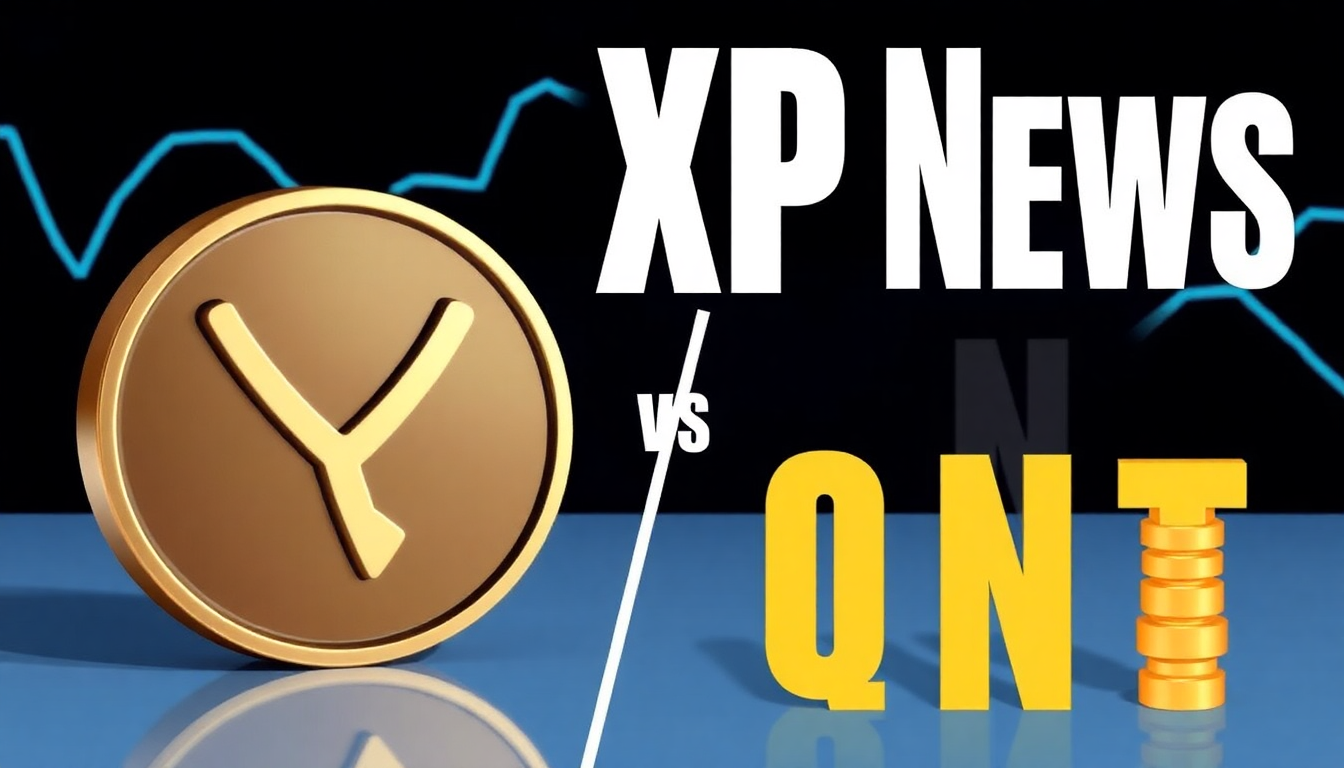
In XRP news, the token has spent nearly nine years below its January 2018 all-time high of $3.84. Still, XRP managed to gain almost eightfold, climbing from roughly $0.49 in November 2024 to $3.66 by July 2025.
YouTuber Moon Lambo argues that a prolonged period of consolidation does not rule out a rapid breakout. He has cited Quant (QNT) and Zcash (ZEC) as examples of cryptocurrencies that remained stagnant for years before posting substantial gains.
Those cases demonstrate that extended consolidation can precede an outsized rally, but they do not establish that XRP will follow the same path. That distinction is important when considering whether XRP can make another attempt at price discovery. In a post on X, Moon Lambo disputed the idea that XRP is permanently unable to set a new record simply because it has remained below its previous high since 2017.
He argued that XRP should be assessed based on its fundamentals rather than its lengthy price history. He also pointed to his own QNT and ZEC investments to support his view that patience can sometimes precede significant returns in the crypto market.
Moon Lambo purchased QNT for approximately $98 in 2023. The token later declined to about $54 before recovering to roughly $193, producing an unrealized gain of around 97% from his entry. QNT subsequently reached approximately $352 before pulling back.
QNT has also demonstrated how quickly an institutional development can affect a cryptocurrency’s price. The token reportedly tripled within one week after a major U.S. banking partnership, providing a concrete catalyst for a previously dormant market.
His ZEC investment followed a similar pattern. Moon Lambo bought ZEC near $112 in 2021, but the token later fell to around $20. It has since climbed to roughly $1,700 this month, representing an unrealized gain of nearly 1,417%. According to primary reporting referenced in the analysis, ZEC had remained relatively quiet for close to a decade before its recent breakout. Moon Lambo believes this historical pattern is relevant for XRP holders.
However, QNT and ZEC differ substantially from XRP. Their market capitalizations, circulating supplies, liquidity and underlying catalysts are not the same. As a result, the percentage gains achieved by smaller-cap cryptocurrencies do not directly indicate the amount of capital needed to push XRP through a price ceiling that has persisted for years.
Could QNT and ZEC Momentum Affect XRP Demand?
XRP has staged several significant rallies since 2018 but has not reclaimed its January record. Moon Lambo’s argument is that previous unsuccessful attempts do not necessarily determine the outcome of the next breakout attempt.
He believes XRP’s utility has expanded since its previous peak and suggests that prices considered expensive today could look relatively low in hindsight if the token eventually enters sustained price discovery.
At the same time, prolonged consolidation does not guarantee a future recovery. Some cryptocurrencies eventually regain momentum, while others lose adoption or fail to recover after extended declines. Historical stagnation alone cannot determine which outcome will occur.
For XRP, the more important question is whether sufficient demand exists to support a sustained move higher. Comparisons with QNT and ZEC show that long periods of limited price movement can be followed by sharp rallies, but they do not by themselves establish a similar setup for XRP.
ETF flows remain one of the main potential sources of additional XRP demand. Sustained inflows confirmed through fund issuers’ reported figures could provide evidence of ongoing buying interest.
However, ETF demand would need to absorb or outweigh selling pressure in the spot market for those inflows to translate into a sustained move toward or above $4. Without corresponding data showing that ETF purchases are consistently offsetting broader selling, treating ETF flows as a confirmed catalyst would be premature.
For XRP to achieve genuine price discovery, the token would need to demonstrate sustained demand at a market-capitalization and liquidity scale measured in the tens of billions of dollars. That presents a materially different challenge from the market conditions surrounding smaller-cap assets such as QNT and ZEC.