Bitcoin $40K Scenario Seen as Statistically Extreme Despite Recent Rally
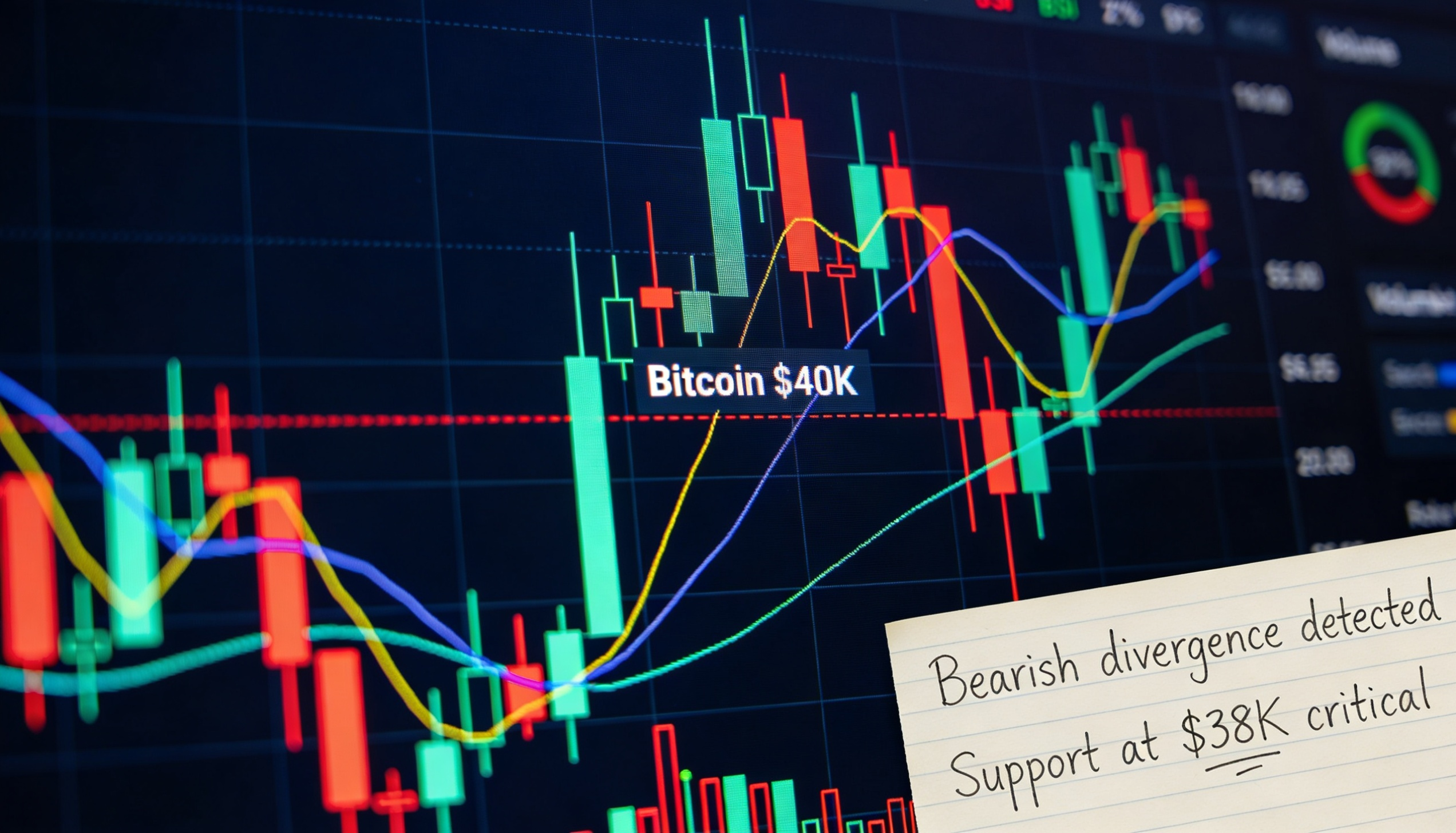
Mean-reversion models indicate that bearish projections for Bitcoin falling to $40,000 would represent a 0.4th percentile event — an outcome far beyond the scope of typical market corrections.
Bitcoin (BTC), currently trading around $77,896, has climbed nearly 15% this month. However, the rebound has done little to convince some market participants that the asset has fully exited the bear phase that began in October. Despite recent gains, Bitcoin remains roughly 40% below its all-time high.
Some bearish forecasts continue to circulate, with projections suggesting a possible decline to $40,000 — a drop of nearly 70% from peak levels. According to Bitcoin analyst James Check, while such a move cannot be ruled out entirely, it would be statistically extraordinary.
Following its surge above $126,000 in October, Bitcoin retraced more than 50% to approximately $60,000 by February before stabilizing. As of Friday, the cryptocurrency was trading near $78,000.
Addressing bearish outlooks, Check urged closer examination of such projections through a statistical lens.
He highlighted the Bitcoin Mean Reversion Index, a composite framework that aggregates several key valuation metrics, including the 200-week moving average, realized price, power law trend, and various volume-weighted average price (VWAP) measures. The index ranks Bitcoin’s price within historical percentile ranges.
At a modeled price of $40,000, Bitcoin would register as a “0.4 event,” placing it in the 0.4th percentile of all daily closes on record.
“That’s below any meaningful deviation across all major anchors,” Check noted.
For comparison, such an extreme deviation would be akin to Bitcoin trading below $2 in 2011 on a relative basis. In contrast, current price levels sit around the 31.5th percentile — historically weak, but still within the bounds of normal market corrections.
“There’s no zero probability in markets,” Check added, “but this would be a near-unprecedented outcome.”